

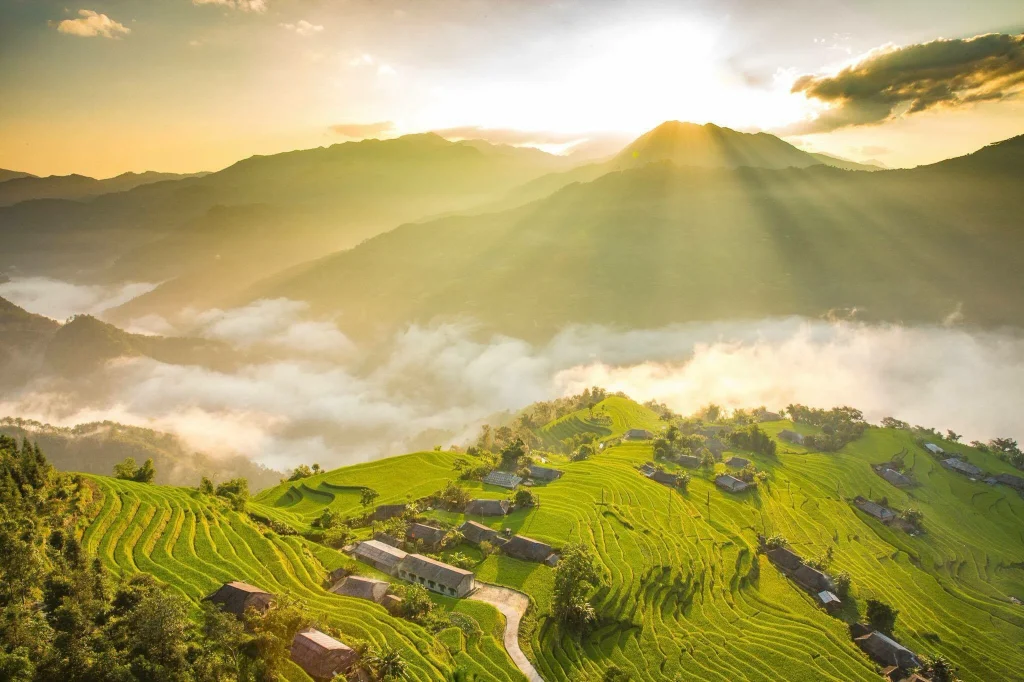
If Northern Vietnam is a magnificent painting of mountains and forests, Ha Giang is one of its most captivating strokes. Nestled among the towering mountains of northern Vietnam, Ha Giang impresses visitors with its rugged, majestic, and enchanting beauty. Winding roads cross the rocky highlands, lush green valleys lie between dramatic mountain ranges, and peaceful villages tucked into the hills create a remarkable natural landscape.
A journey to Ha Giang is not only about admiring breathtaking scenery. It is also an opportunity to discover the lives and cultures of the ethnic communities living in the highlands — from colorful local markets and traditional costumes to houses nestled along the mountainsides, as well as customs and festivals passed down through generations. Every road and every stop along the way has its own story to tell.
INTRODUCTION TO HA GIANG
Ha Giang is Vietnam’s northernmost province, often regarded as the starting point of the country’s northern frontier. It is renowned for its spectacular landscapes, diverse ethnic cultures, and some of the most challenging mountain passes in northern Vietnam.
Blessed with distinctive limestone terrain, endless mountain ranges, valleys, rivers, and streams, Ha Giang offers a cool climate and a rare sense of untouched natural beauty. It is an ideal destination for travelers seeking adventure, exploration, and authentic cultural experiences.
Ha Giang is home to more than 20 ethnic groups, including the H’Mong, Dao, Tay, and Nung. Each community has its own distinctive traditions, costumes, cuisine, language, and customs. This cultural diversity makes a journey through Ha Giang about much more than sightseeing — it is also an opportunity to discover one of the richest cultural landscapes in Vietnam’s northern highlands.
FEATURED TOURIST ATTRACTIONS
Dong Van Karst Plateau
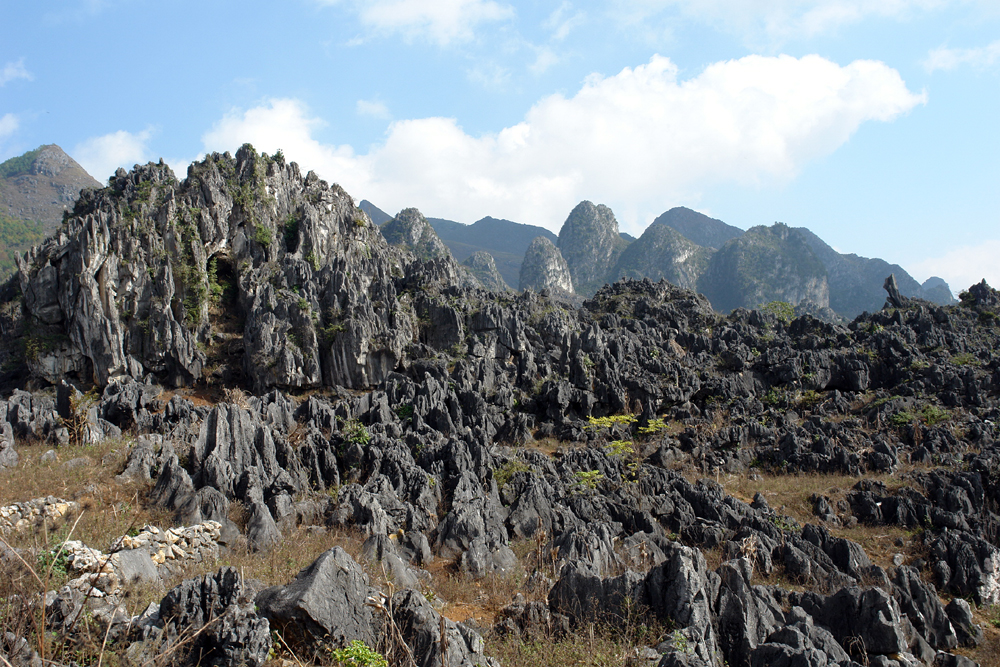
When talking about Ha Giang, it is impossible not to mention the Dong Van Karst Plateau. Spanning the districts of Quan Ba, Yen Minh, Dong Van, and Meo Vac, the plateau covers an area of approximately 2,345 square kilometers.
The region is characterized by dramatic limestone mountains, deep gorges, and valleys nestled between rugged peaks. Here, visitors can admire a rare and spectacular natural landscape while learning about the traditional way of life of ethnic communities such as the H’Mong, Lo Lo, and Dao, who have made their homes in this remarkable “stone kingdom.” These unique landscapes have made the Dong Van Karst Plateau a particularly attractive destination for adventure travelers, nature lovers, and photographers
Ma Pi Leng Pass
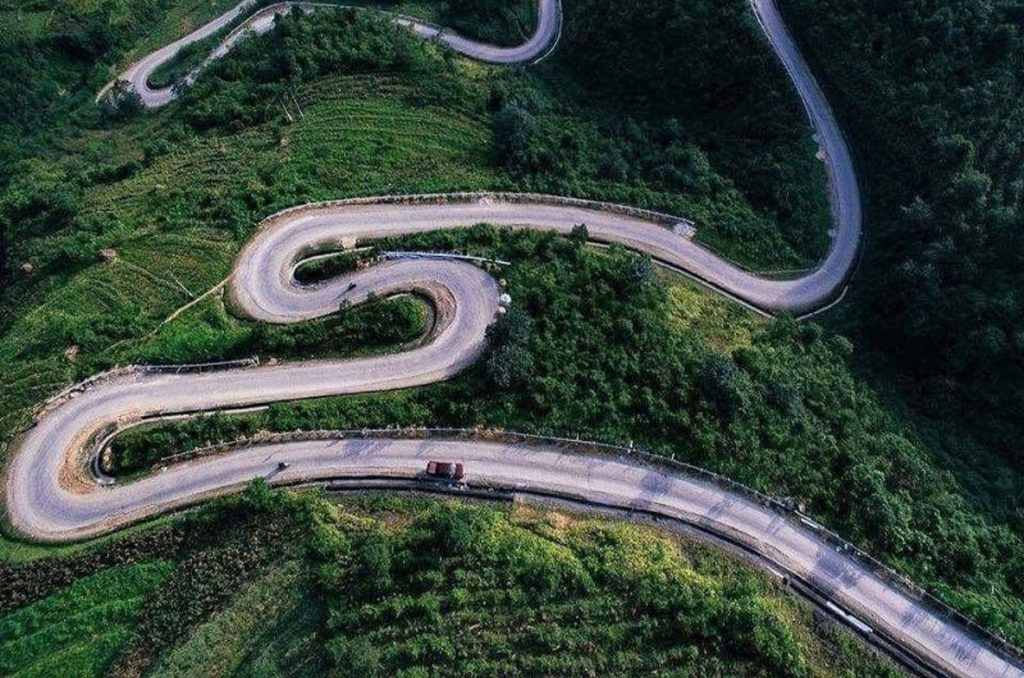
Ma Pi Leng Pass is one of Ha Giang’s most famous mountain roads, featuring towering cliffs and a narrow road winding along the mountainside. Its rugged and majestic scenery can be breathtaking, combining dramatic mountains with peaceful and poetic landscapes. On some days, clouds drift across the mountain slopes while sunlight filters through the clouds and illuminates the grass and valleys below, creating a harmonious scene between sky, mountains, and nature.
Known as a paradise for adventure travelers, Ma Pi Leng Pass offers not only an opportunity to explore the spectacular landscape but also an unforgettable sense of adventure and challenge.
Nho Que River – Tu San Canyon
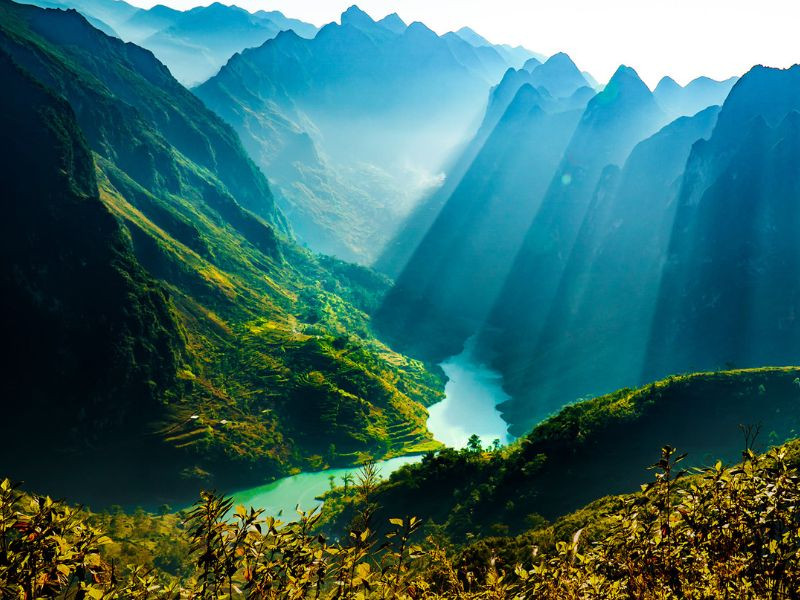
The Nho Que River winds its way between towering cliffs, creating a peaceful ribbon of emerald-green water surrounded by impressive limestone mountains.
As they travel along the river, visitors can admire Tu San Canyon, one of Ha Giang’s most remarkable natural attractions. Depending on their preference, travelers can take a motorboat or kayak and experience the river from a different perspective.The experience combines tranquility with adventure and is especially appealing to photography enthusiasts, travelers looking for unforgettable moments, or anyone wishing to enjoy a peaceful escape amidst spectacular mountain scenery.
Lung Cu Flag Tower
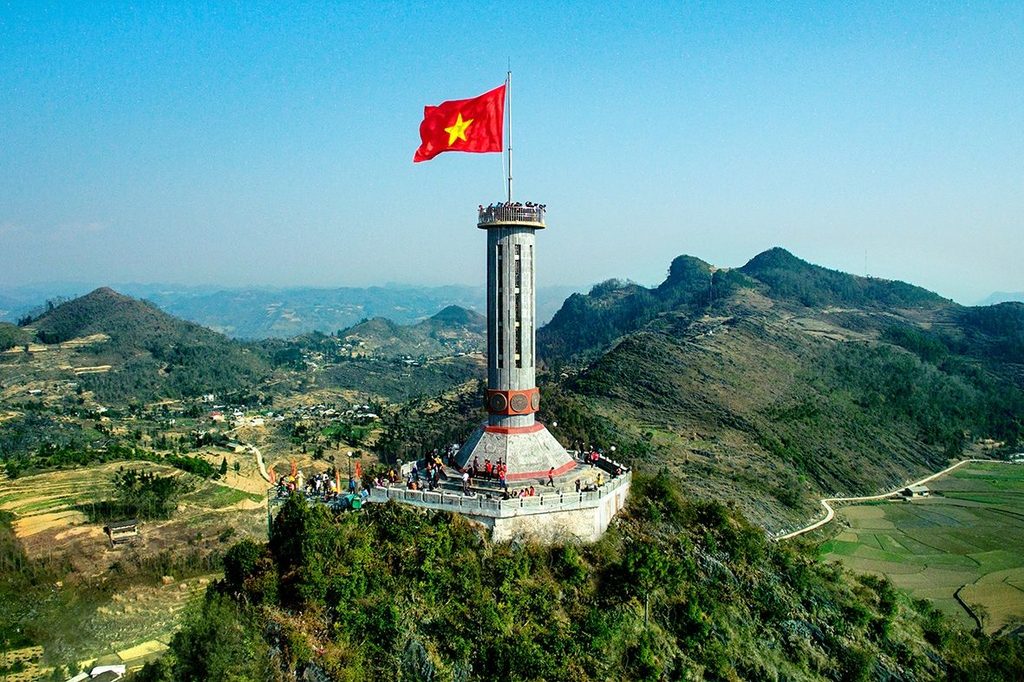
Lung Cu Flag Tower is a sacred symbol of Vietnam’s northernmost frontier. Standing atop Rong Mountain, the tower is home to a large national flag representing the 54 ethnic groups of Vietnam.
Although the path leading to the flag tower includes steep sections and numerous steps, reaching the top is a rewarding experience. From an elevation of more than 1,400 meters above sea level, visitors can enjoy panoramic views of the surrounding valleys, mountains, and small villages below.
THE CULTURAL IDENTITY OF HA GIANG’S ETHNIC COMMUNITIES
As a mountainous border province in the northernmost part of Vietnam, Ha Giang is home to 19 ethnic groups, with ethnic minorities accounting for nearly 90% of the population.
Each community has its own traditional culture, customs, and way of life, creating a diverse and distinctive cultural identity. Together, these traditions form a rich cultural mosaic that makes Ha Giang unique.
Highland Local Markets
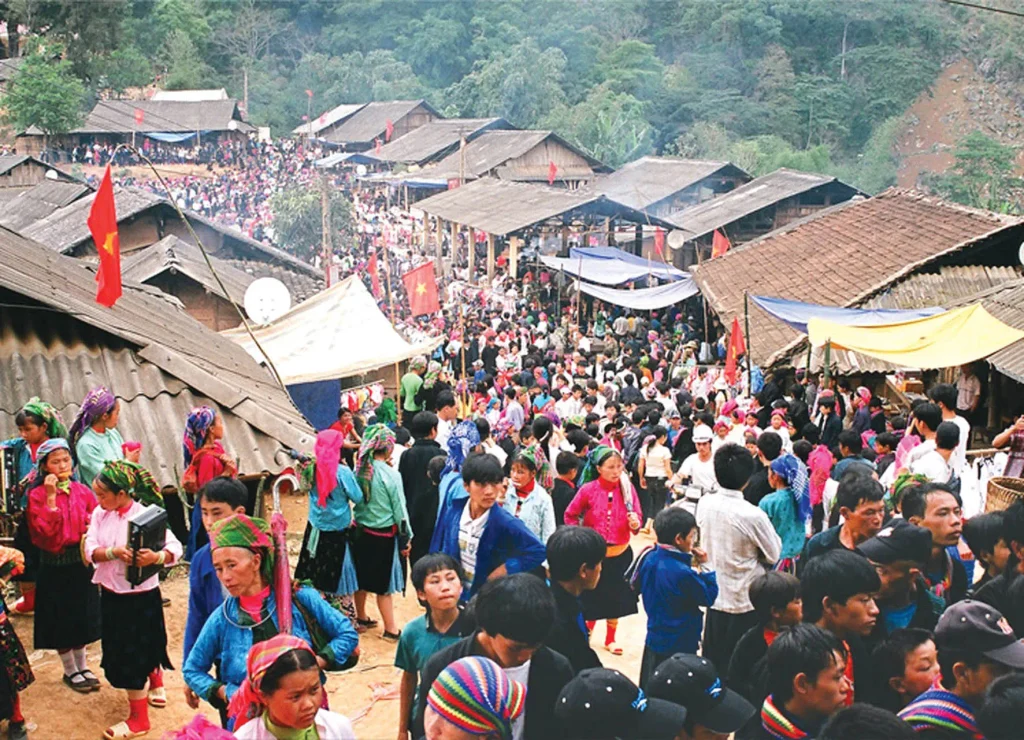
A visit to Ha Giang would not be complete without experiencing one of its colorful highland markets. These markets are not simply places for buying and selling goods; they are also important social spaces where local people meet, communicate, and connect with one another.
Visitors can see people dressed in vibrant traditional costumes, hear lively conversations, and experience the unique atmosphere of the highlands.The markets also offer a wide variety of local specialties and traditional foods that are rarely found in urban areas, making them an unforgettable cultural experience for travelers.
Lo Lo Chai Cultural Village
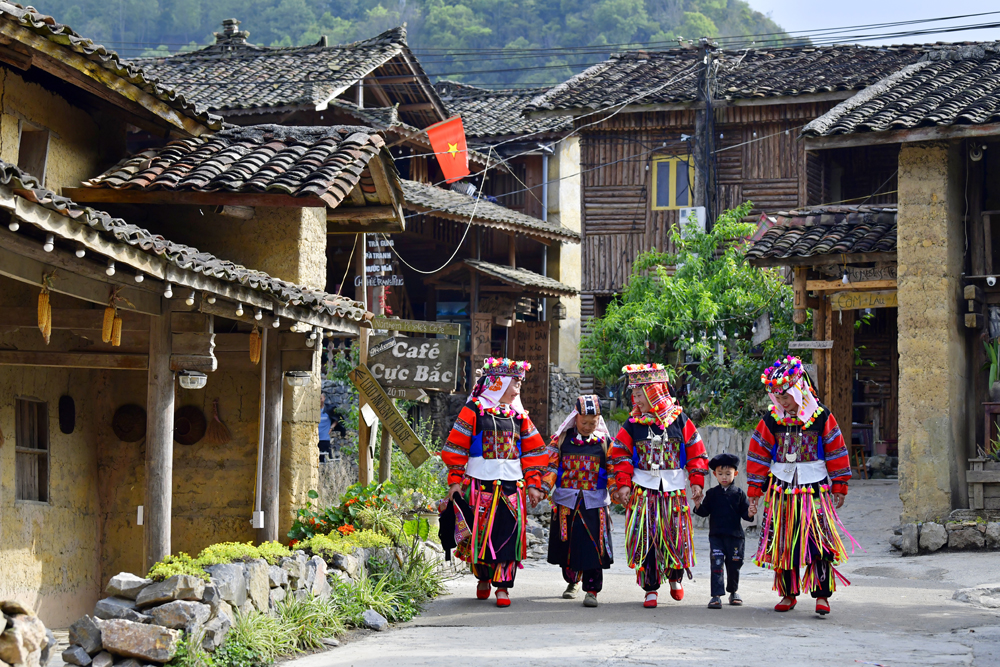
Located at the foot of Lung Cu Flag Tower, near Vietnam’s northernmost point, Lo Lo Chai is a small village inhabited by the Lo Lo ethnic community at an altitude of approximately 1,470 meters above sea level.
Visitors to Lo Lo Chai can admire a beautiful traditional village featuring earthen-walled houses and distinctive tiled roofs. The village also provides opportunities to discover traditional crafts such as embroidery, tile making, and woodworking.
If you visit during a festival, you may have the chance to experience traditional celebrations such as the Forest God Worship Ceremony, New Rice Festival, and Housewarming Ceremony, as well as traditional folk dances.
The Lo Lo people are also known for their traditional use of a pair of bronze drums — one male and one female — which hold an important place in their cultural traditions.
Visitors can also experience everyday life alongside local residents by joining activities such as working in the fields, gathering vegetables, herding cattle, cooking, and enjoying traditional local dishes.
Traditional Festivals
For travelers interested in cultural exploration, visiting Ha Giang during a traditional festival can provide a deeper understanding of the region’s ethnic communities. Each ethnic group has its own cultural identity, while every festival carries its own meaning, reflecting local beliefs, customs, and wishes for peace, prosperity, and a successful harvest.
Festivals provide an opportunity to gain a closer look at the traditions and beliefs of local communities. With so many ethnic groups living together in Ha Giang, these celebrations highlight the remarkable diversity and harmony of the region’s cultural heritage.
HIGHLAND CUISINE
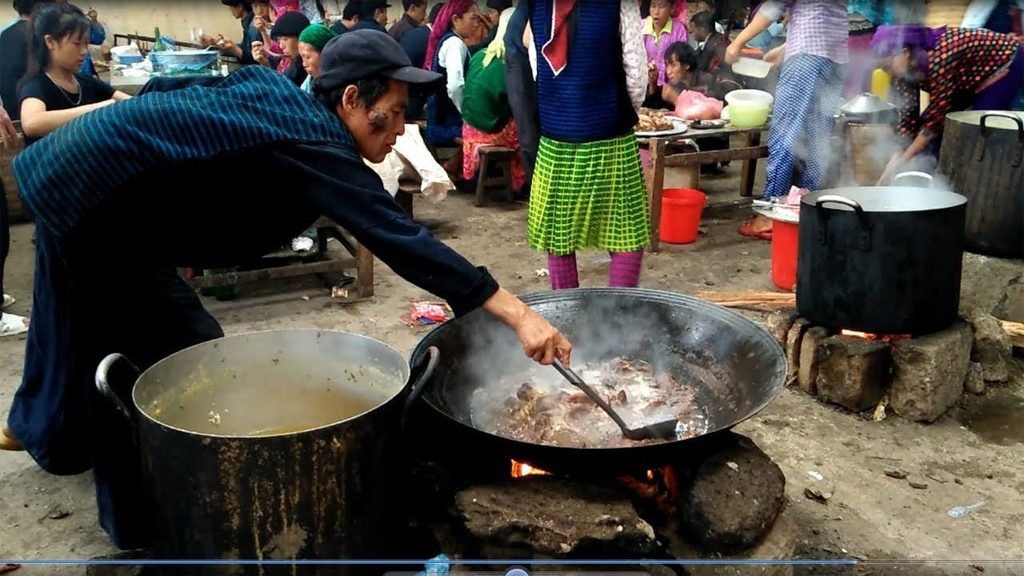
A destination that makes travelers want to return is not always remembered solely for its breathtaking scenery. Sometimes, it is the simple meals and distinctive flavors that remain in the memories of visitors long after they have left. Ha Giang’s cuisine reflects the flavors and traditions of the mountains, featuring specialties such as Thang Co, Au Tau porridge, Men Men, and buckwheat cakes.
Each dish carries more than just a local flavor. It is closely connected to the lifestyle, traditions, and cultural heritage of the people living in the northern highlands.
CLOSING THE JOURNEY, CREATING LASTING MEMORIES
Ha Giang leaves a lasting impression not only through its magnificent landscapes and diverse cultural heritage, but also through the peaceful atmosphere of its villages and the vibrant energy of its highland markets.
Every journey to Ha Giang is an opportunity to connect with nature, discover local cultures, and meet warm-hearted and humble people. When the journey comes to an end, the winding mountain roads may slowly disappear behind you, but the colors of the Stone Land and the stories of its highlands will remain in your memories long after you leave.
Ha Giang is more than a destination — it is a journey into nature, culture, and unforgettable memories.