

1. Introduction to Bai Dinh Pagoda
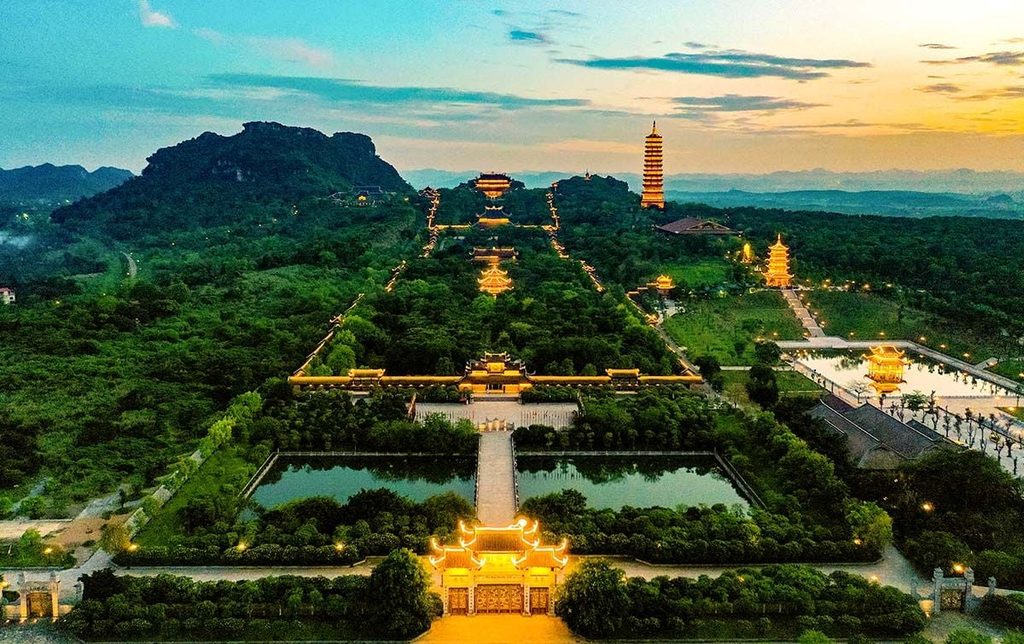
The pagoda is situated at the western gateway to the Hoa Lu Ancient Capital relic site in Gia Sinh Commune, Gia Vien District, Ninh Binh Province—15 km from Ninh Binh City and 95 km from Hanoi. The Bai Dinh Pagoda complex comprises an ancient pagoda area and a new pagoda area constructed starting in 2003. Over the years, it has become a famous destination, attracting numerous Buddhists and tourists alike.
The ancient Bai Dinh Pagoda sits atop a 187-meter-high mountain, located approximately 800 meters southeast of the Tam The Hall in the new pagoda complex. Nestled near the summit of a tranquil, forested mountain area, the ancient complex features a central front hall; turning right leads to the “Bright Cave” (Hang Sang) dedicated to the Buddha, followed by the Cao Son Deity Temple near the cave’s rear exit; turning left leads to the Saint Nguyen Temple, followed by the “Dark Cave” (Dong Toi) dedicated to the Mother Goddess and fairies. The site is located on land believed—according to Vietnamese folklore—to possess the auspicious qualities that give birth to kings, saints, and deities.
In 1997, the ancient Bai Dinh Pagoda was recognized as a national-level historical, cultural, and revolutionary relic site. Interestingly, although the pagoda dates back to the Dinh Dynasty, it features architectural details and artifacts that bear the distinct imprint of the Ly Dynasty.
2. Architecture of Bai Dinh Pagoda
Ninh Binh is the ancestral land of three Vietnamese feudal dynasties: the Dinh, Early Le, and Ly. Consequently, visitors to this spiritual and cultural complex can admire architectural features deeply imbued with the identity of ancient Vietnam. Visitors are invariably awestruck by the vast scale of the pagoda complex, particularly at night when the lighting system transforms Bai Dinh into a magnificent and majestic sight.
The Three-Entrance Gate (*Tam Quan*) is a characteristic feature of Vietnamese feudal-era gateways, consisting of one central entrance and two side entrances. The pagoda’s architecture is defined by massive structures featuring deep, soaring curved roofs reminiscent of the phoenix; grand edifices include the Phap Chu Hall, Tam Quan Hall, and Quan Am Hall.
The halls are typically constructed with a multi-bay layout; the central bay—the largest—usually houses statues of the Buddha and Bodhisattva Avalokiteshvara (Quan Am). The halls feature towering wooden columns intricately carved with dragon and phoenix motifs.
The architecture of Bai Dinh Pagoda is the result of contributions from numerous renowned artisans and represents the finest craftsmanship from traditional Vietnamese craft villages, including Cat Trang lacquerware, Y Yen bronze casting, embroidery, and stone carving.
Key materials used in the pagoda’s interior design include Bat Trang ceramics, precious “Tu Thiet” timber, and—notably—local Ninh Binh green stone. Through the use of indigenous materials and the skilled hands of artisans, authentic Vietnamese cultural beauty is depicted in a unique and vivid manner
3. Notable Attractions
Tam The Hall
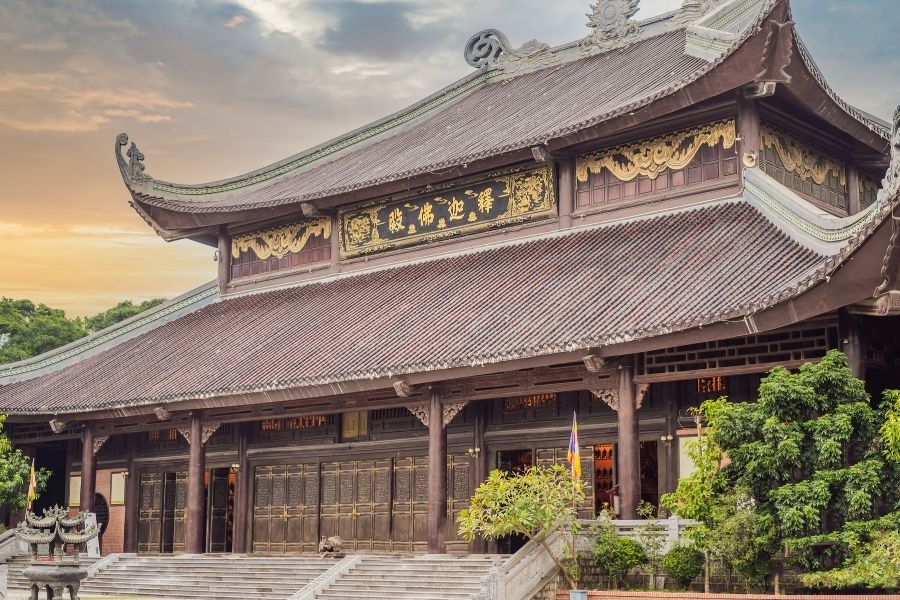
Tam The Hall is one of the largest and most prominent structures within the Bai Dinh complex. Inside the main hall stand three Buddha statues representing the three eras: past, present, and future.
The vast space, combined with traditional wooden architecture and tiled roofs, creates an atmosphere of solemnity that leaves a striking impression on first-time visitors.
The Arhat Corridor
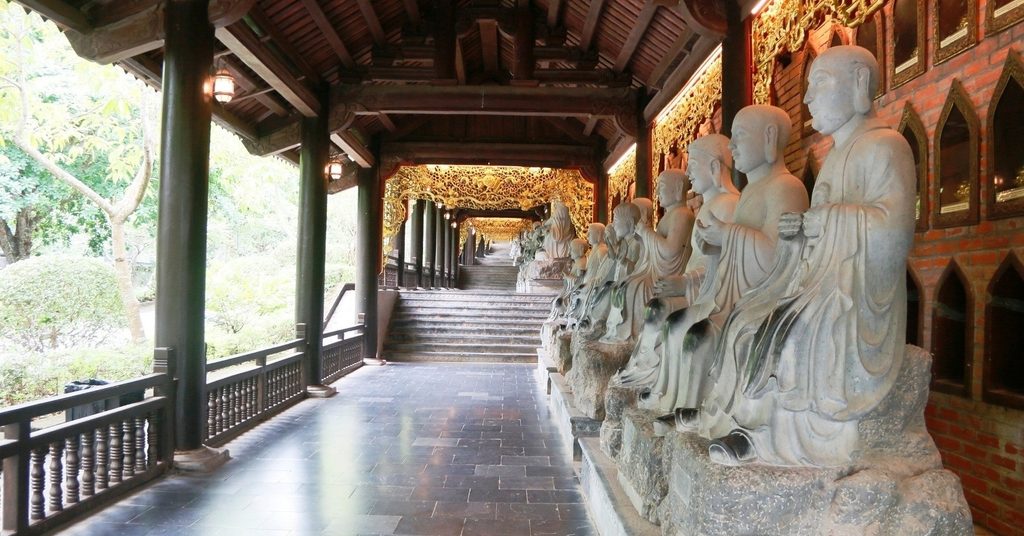
The Arhat Corridor is a favorite attraction among visitors. Lining this 3-kilometer-long walkway is a series of stone-carved Arhat statues, each featuring a unique posture and expression.
It is also an ideal spot for visitors to explore Buddhist culture while enjoying the peaceful ambiance of the surrounding mountains and forests.
The Bell Tower
The Bell Tower is a structure with unique architecture within the complex. Built in a traditional style with multiple tiered roofs, it stands out as a prominent landmark amidst the mountainous landscape.
4. Combining a visit to Bai Dinh Pagoda with a Ninh Binh exploration tour
Bai Dinh Pagoda is an excellent addition to any Ninh Binh itinerary. After visiting the pagoda, travelers can proceed to the Trang An Scenic Landscape Complex to take a boat tour among limestone karsts, immersing themselves in the peaceful atmosphere and poetic beauty. Afterward, a visit to the Hoa Lu Ancient Capital offers a chance to learn about Vietnamese history.
This blend of spiritual, natural, cultural, and historical experiences makes a trip to Ninh Binh far more diverse and captivating.

5. A journey to tranquility
Beyond its grand architectural structures, Bai Dinh Pagoda offers visitors a serene sanctuary amidst the natural beauty of Ninh Binh. The sound of temple bells, ancient tiled roofs, the Arhat corridor, and the surrounding mountain scenery create a unique experience for everyone who sets foot here.