

1. Introduction to Hanoi Tourism
Hanoi, the thousand-year-old capital of Vietnam, is an attractive destination for both domestic and international travelers thanks to its harmonious blend of ancient charm, traditional culture, and modern urban life. From small streets steeped in history and centuries-old architectural landmarks to peaceful lakes and bustling commercial districts, Hanoi offers a wide variety of experiences for every traveler.
Beyond its historical monuments, Hanoi also attracts visitors with its rich culinary scene, traditional craft villages, and distinctive local lifestyle. If you have the opportunity to visit the capital, here are some of the most famous tourist attractions you should not miss.
2. Famous Tourist Attractions in Hanoi
2.1. Hoan Kiem Lake – A Symbol of the Capital
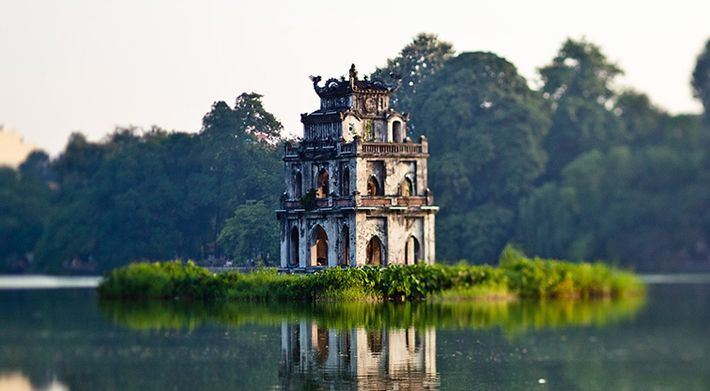
Hoan Kiem Lake, also known as Sword Lake, is one of Hanoi’s most iconic landmarks. Located in the heart of the city, the lake impresses visitors with its emerald-green waters, ancient trees, and peaceful atmosphere amid the bustling urban environment.
The lake’s most distinctive features are Turtle Tower, standing on a small island in the middle of the water, and the red-painted The Huc Bridge leading to Ngoc Son Temple. Visitors can take a leisurely walk around the lake, capture beautiful photos, learn about the legend of King Le Thai To returning the sacred sword, or enjoy the lively atmosphere of the pedestrian streets on weekends.
2.2. Hanoi Old Quarter – Traditional Charm in the Heart of the City
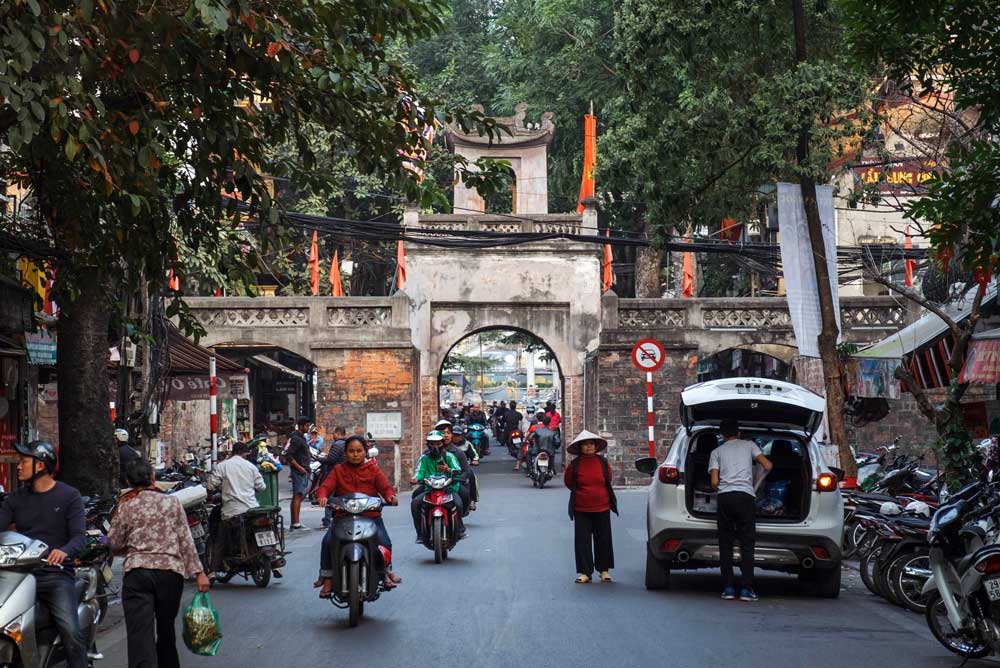
Hanoi Old Quarter is an ideal destination for travelers who want to explore the capital’s history, culture, and everyday local life. The area is characterized by narrow streets, traditional tube houses, long-established shops, and rooftops that reflect the architectural style of old Hanoi.
As you stroll along Hang Ma, Hang Dao, Hang Bac, or around Dong Xuan Market, you can discover traditional handicrafts, shop for souvenirs, and sample local specialties such as Hanoi pho, bun cha, Vietnamese steamed rice rolls, and egg coffee. The Old Quarter becomes particularly lively in the evening, offering visitors an enjoyable insight into Hanoi’s vibrant street culture.
2.3. Ho Chi Minh Mausoleum – A Sacred Historical Landmark
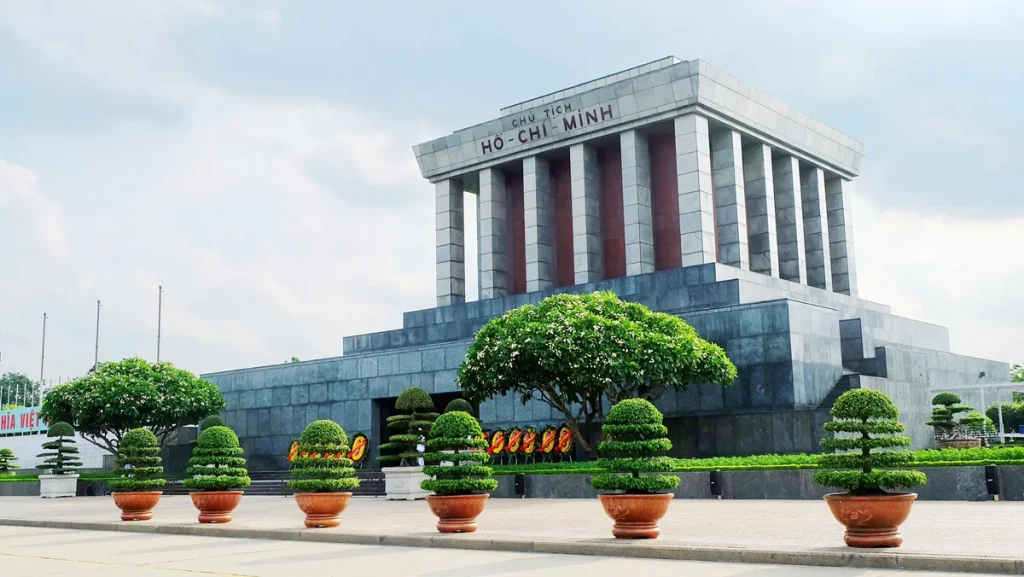
The Ho Chi Minh Mausoleum is one of Vietnam’s most important historical monuments. It is the resting place of President Ho Chi Minh, the beloved leader of the Vietnamese people. The mausoleum is located in Ba Dinh Square, where President Ho Chi Minh proclaimed Vietnam’s Declaration of Independence on September 2, 1945.
Visitors can learn more about Vietnam’s national history, explore the square, and visit nearby attractions such as the Presidential Palace, Ho Chi Minh’s Stilt House, and the Ho Chi Minh Museum. When visiting the complex, travelers should follow the regulations regarding appropriate clothing, security procedures, and opening hours.
2.4. Temple of Literature – A Symbol of Vietnam’s Tradition of Learning
The Temple of Literature, also known as Van Mieu – Quoc Tu Giam, is a famous historical and cultural site that represents Vietnam’s long-standing traditions of respecting teachers and valuing education. Built in 1070, it once served as an important center of Confucian education and played a significant role in the history of Vietnam’s imperial examinations.
The complex features the main entrance gate, the Lake of Literature, the Pavilion of the Constellation of Literature, the Well of Heavenly Clarity, and stone stelae recording the names of doctoral graduates, mounted on the backs of stone turtles. With its traditional architecture and ancient atmosphere, the Temple of Literature is an ideal destination for visitors interested in Vietnamese history, culture, and architecture
2.5. West Lake – A Peaceful Retreat in Hanoi
West Lake is the largest natural lake within Hanoi’s urban area, famous for its expansive views, fresh air, and picturesque lakeside roads. It is a popular destination for both locals and tourists who want to take a walk, cycle, watch the sunset, or enjoy a cup of coffee overlooking the water.
The surrounding area also offers several interesting attractions, including Tran Quoc Pagoda, Tay Ho Temple, and various local dining streets. In the late afternoon, the sunset reflecting on the lake creates a romantic and beautiful scene, making West Lake an excellent place to experience a quieter and more relaxing side of Hanoi.
2.6. Tran Quoc Pagoda – An Ancient Pagoda by West Lake
Located on a small peninsula on the eastern side of West Lake, Tran Quoc Pagoda is one of the oldest Buddhist temples in Hanoi. The pagoda impresses visitors with its traditional Buddhist architecture, multi-tiered stupa, and tranquil setting surrounded by the lake.
Beyond being a place of worship, Tran Quoc Pagoda is also a popular cultural attraction among visitors. Here, travelers can learn about the history of Buddhism in Vietnam, admire the temple’s ancient architecture, and enjoy a peaceful atmosphere in the heart of the city.
2.7. St. Joseph’s Cathedral – A Touch of European Architecture
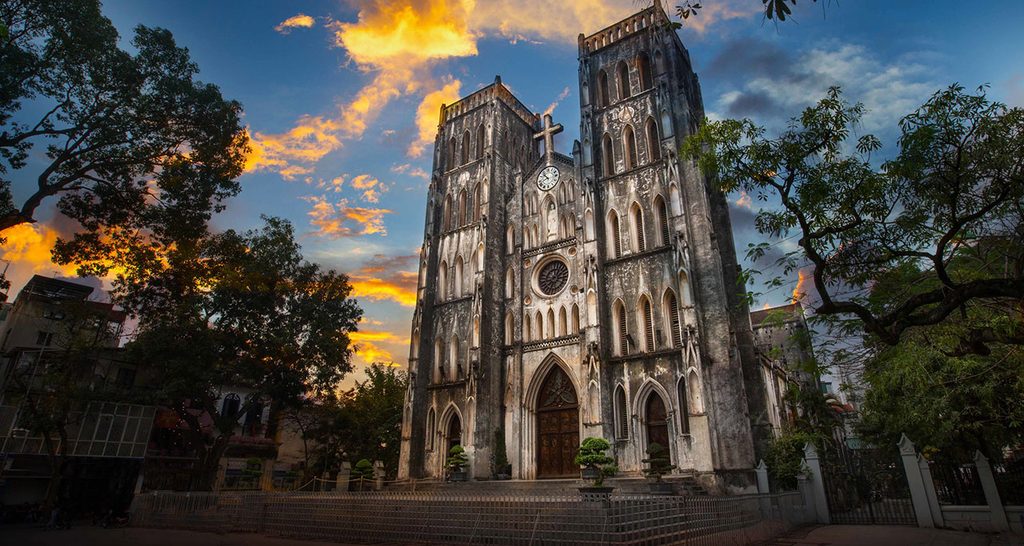
St. Joseph’s Cathedral, officially known as the Cathedral of St. Joseph, is a prominent architectural landmark located near Hanoi’s Old Quarter. Built in the Gothic style, the cathedral stands out with its two tall bell towers, weathered stone facade, and colorful stained-glass windows that reflect traditional European ecclesiastical architecture.
The surrounding area is also home to numerous cafés, restaurants, and small shops. Visitors can combine a visit to the cathedral with exploring nearby streets, enjoying a cup of coffee, and experiencing Hanoi’s youthful and vibrant atmosphere.
3. Discover Hanoi’s Culinary Delights
In addition to its famous tourist attractions, Hanoi also captivates visitors with its distinctive culinary scene. Dishes such as Vietnamese beef pho, bun cha, cha ca (Vietnamese grilled fish with turmeric and dill), bun thang (a traditional Hanoi noodle soup), Vietnamese steamed rice rolls, and Vong Village green rice flakes have all contributed to the unique identity of the capital’s cuisine.
Egg coffee is another popular specialty among visitors, thanks to its rich, creamy texture, delicate aroma, and unique preparation method. Exploring Hanoi’s food scene is not just about enjoying delicious dishes; it is also an opportunity to experience the city’s local culture and everyday lifestyle.
4. The Best Time to Visit Hanoi
Hanoi experiences four distinct seasons, each offering its own unique charm. Autumn, typically lasting from September to November, is a favorite time for many travelers thanks to its relatively cool weather, clear blue skies, and streets adorned with golden leaves.
Spring brings a refreshing atmosphere and numerous traditional cultural activities. Summer is ideal for exploring the city in the early morning or late afternoon, while winter offers the distinctive cool weather of northern Vietnam.
Travelers are advised to check the weather forecast before their trip and plan their itinerary accordingly to make the most of their journey through Vietnam’s capital.