

Ho Chi Minh Mausoleum, commonly known as Uncle Ho’s Mausoleum, is one of the most important historical landmarks in Hanoi and one of the most significant destinations in Vietnam.
Located in Ba Dinh Square, where President Ho Chi Minh read the Declaration of Independence on September 2, 1945, the Mausoleum is not only an impressive architectural landmark but also a place of great historical, cultural, and spiritual significance for the Vietnamese people.
For Vietnamese visitors, paying respects at the Mausoleum is a meaningful experience. For international travelers, it offers an opportunity to learn more about Vietnam’s modern history and the life and legacy of President Ho Chi Minh.
A visit to the Mausoleum is therefore much more than sightseeing – it is a journey into an important chapter of Vietnamese history.
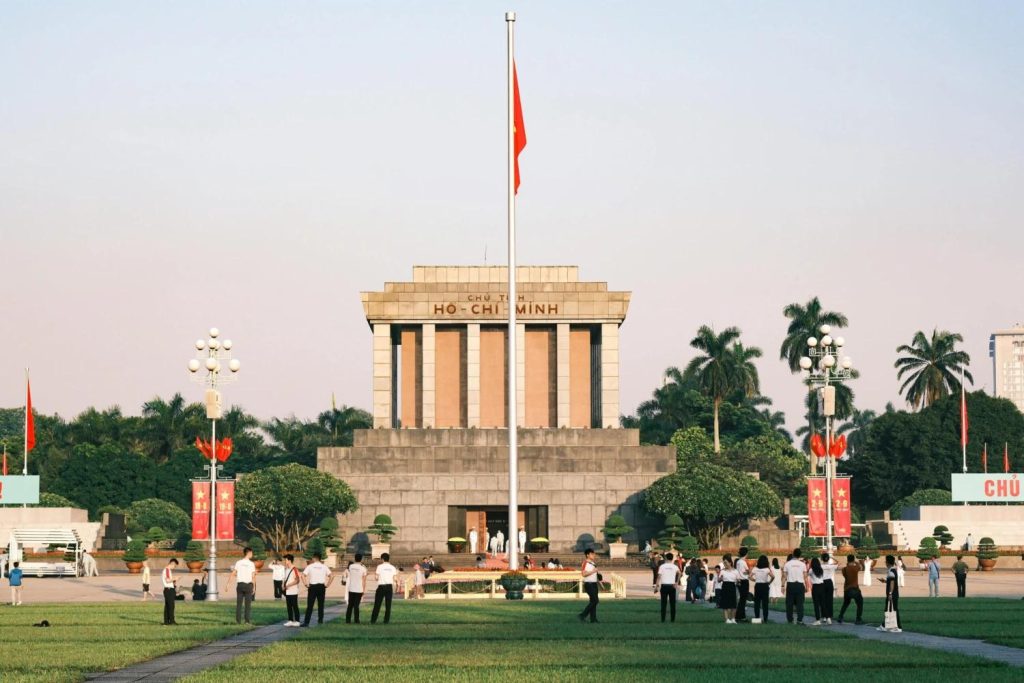
1. Where Is Ho Chi Minh Mausoleum?
Ho Chi Minh Mausoleum is located at Ba Dinh Square in Ba Dinh District, Hanoi, within a historic complex associated with President Ho Chi Minh and Vietnam’s modern history.
Several important attractions are located within walking distance of the Mausoleum, including:
- Ho Chi Minh Mausoleum
- Ba Dinh Square
- The Ho Chi Minh Presidential Complex
- Ho Chi Minh’s Stilt House
- Ho Chi Minh’s Fish Pond
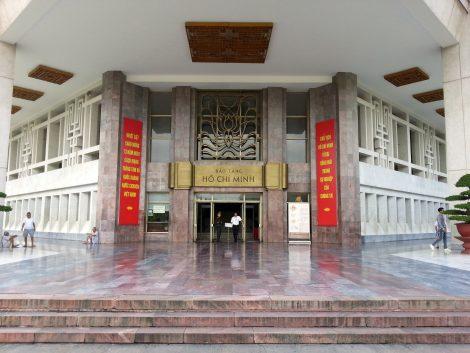
- Ho Chi Minh Museum
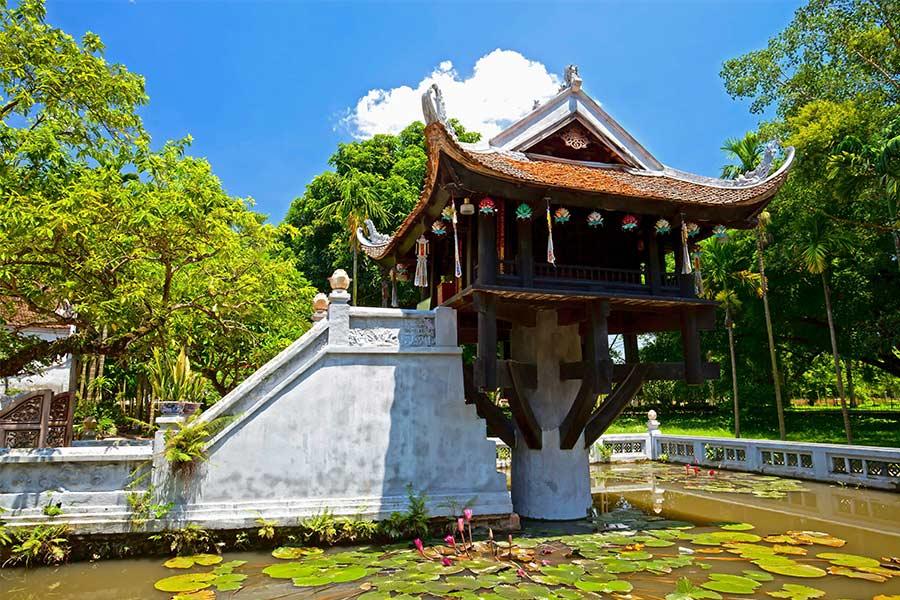
- One Pillar Pagoda
- The Monument to the Heroes and Martyrs
Because these attractions are close to one another, visitors can easily combine them into a half-day Hanoi sightseeing tour.
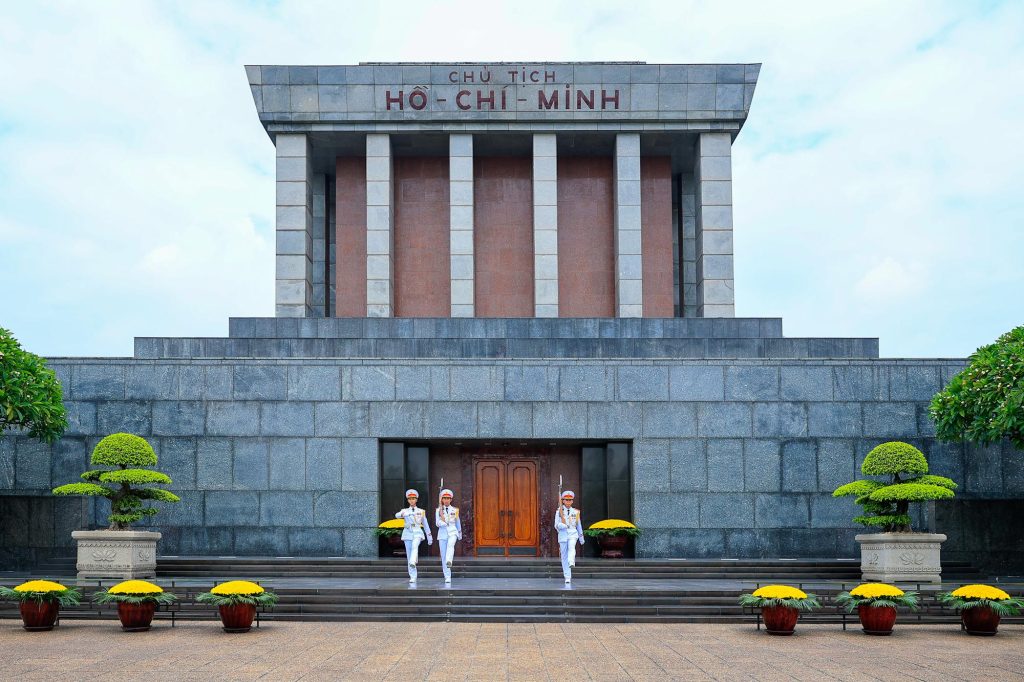
2. History of Ho Chi Minh Mausoleum
After President Ho Chi Minh passed away in 1969, the Vietnamese government decided to construct his Mausoleum at Ba Dinh Square – the historic location where he had proclaimed Vietnam’s independence in 1945.
According to historical information published by the Ho Chi Minh website, the decision to build the Mausoleum was discussed and approved by the Politburo on November 29, 1969.
Construction officially began on September 2, 1973, and the Mausoleum was completed on September 2, 1975.
Since its completion, the Mausoleum has become one of Vietnam’s most important national monuments and a place where Vietnamese people and international visitors come to pay their respects.
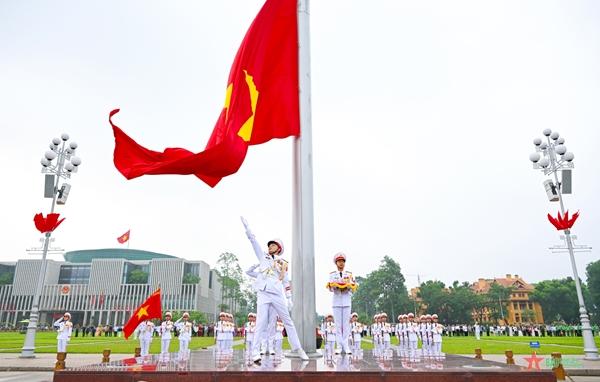
3. Architecture of Ho Chi Minh Mausoleum
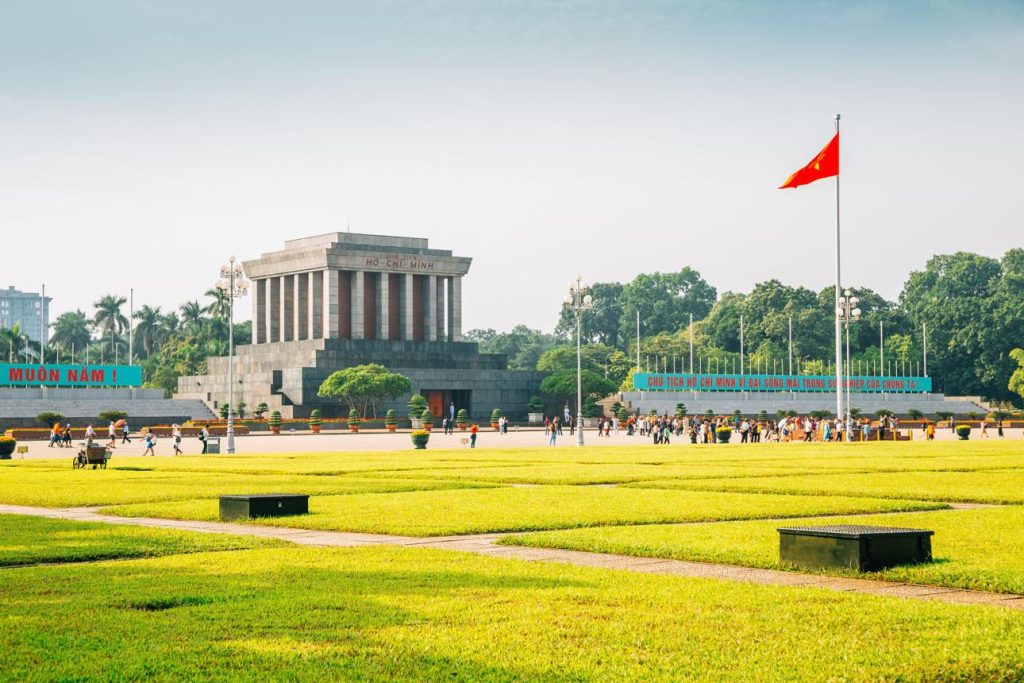
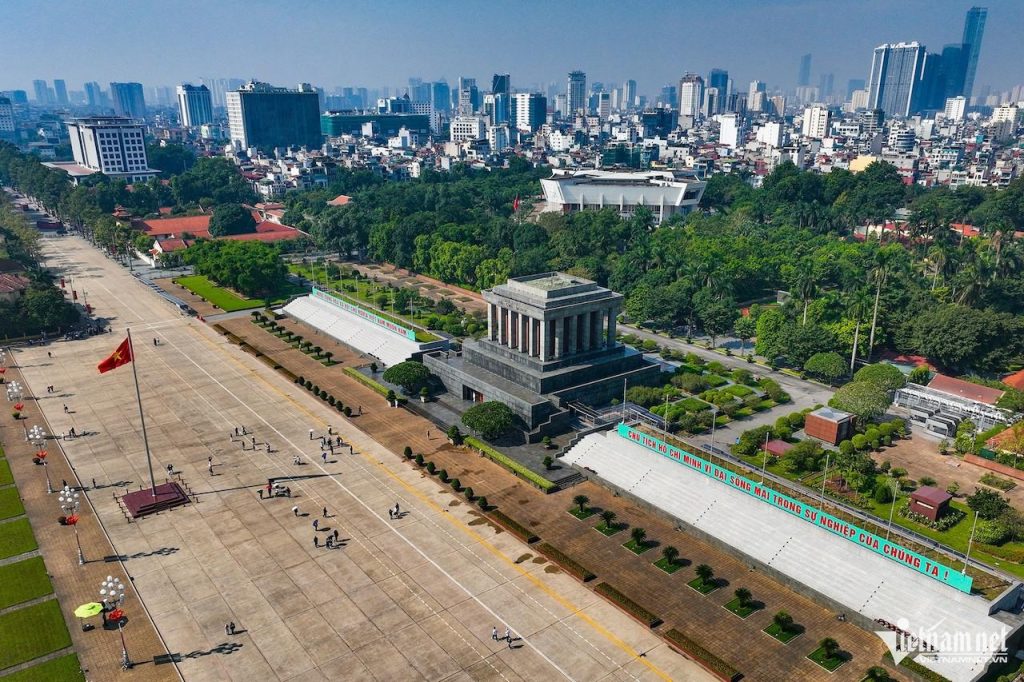
Ho Chi Minh Mausoleum is characterized by its monumental, solemn, and dignified architectural style.
The building is approximately 21.6 meters high and 31 meters wide. Its lower section features broad granite steps, while the upper structure is supported by rows of stone columns, creating a strong and imposing appearance.
The words:
“CHU TICH HO-CHI-MINH”
are displayed prominently on the front of the building.
The Mausoleum was constructed using stone and other materials contributed from different regions of Vietnam. This gives the building a symbolic meaning, representing the unity and affection of the Vietnamese people toward President Ho Chi Minh.
Although monumental in scale, the architecture remains relatively simple and restrained, reflecting the modest character often associated with President Ho Chi Minh.
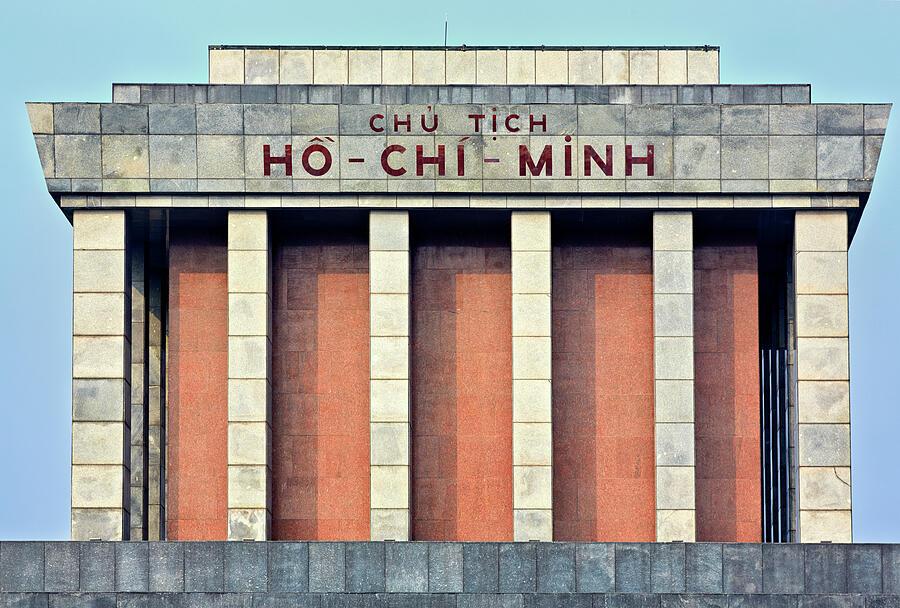
4. Ba Dinh Square – Where Vietnam’s Independence Was Proclaimed
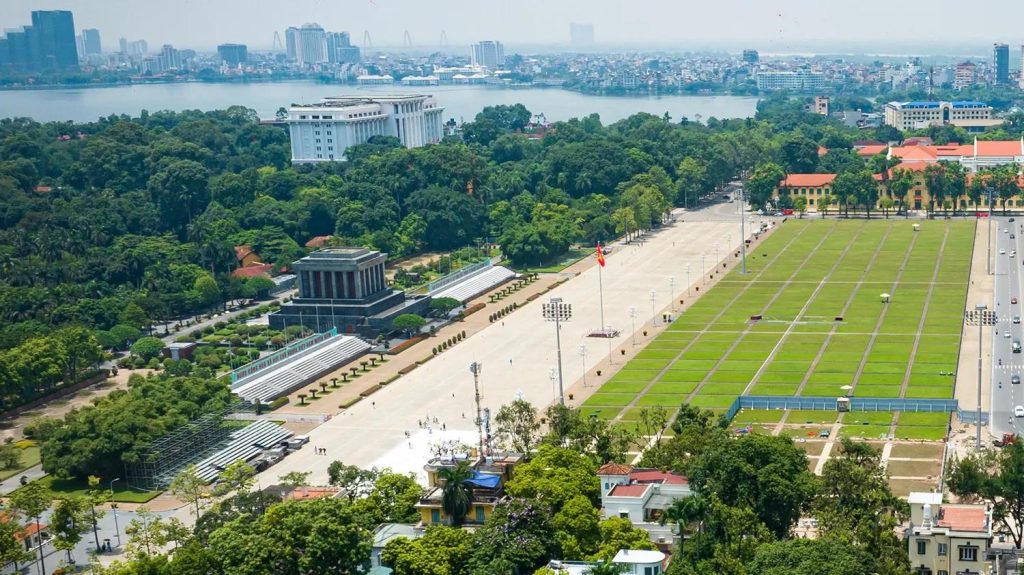
In front of the Mausoleum lies Ba Dinh Square, one of the most historically significant public spaces in Vietnam.
On September 2, 1945, President Ho Chi Minh stood here and read the Declaration of Independence, announcing the establishment of the Democratic Republic of Vietnam.
For this reason, Ba Dinh Square is far more than a tourist attraction. It is a place where visitors can stand at the site of one of the most important events in modern Vietnamese history.
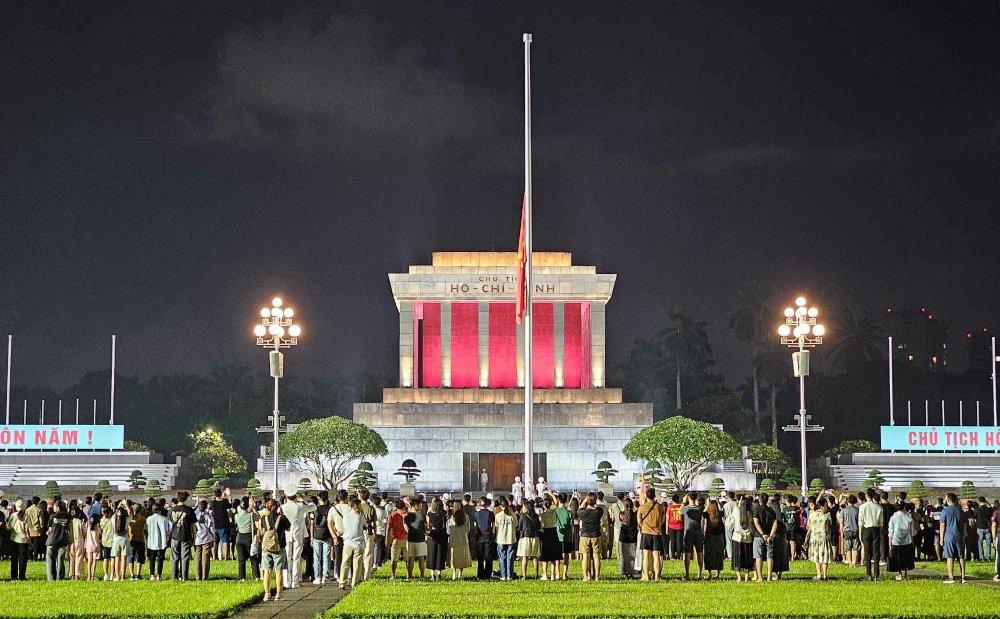
Today, the square features a large open space with carefully maintained green lawns. The Vietnamese national flag flies prominently in front of the Mausoleum, creating one of the most recognizable scenes in Hanoi.
The square is currently divided into 210 grass plots, creating its distinctive green landscape.
5. The Flag-Raising and Flag-Lowering Ceremonies
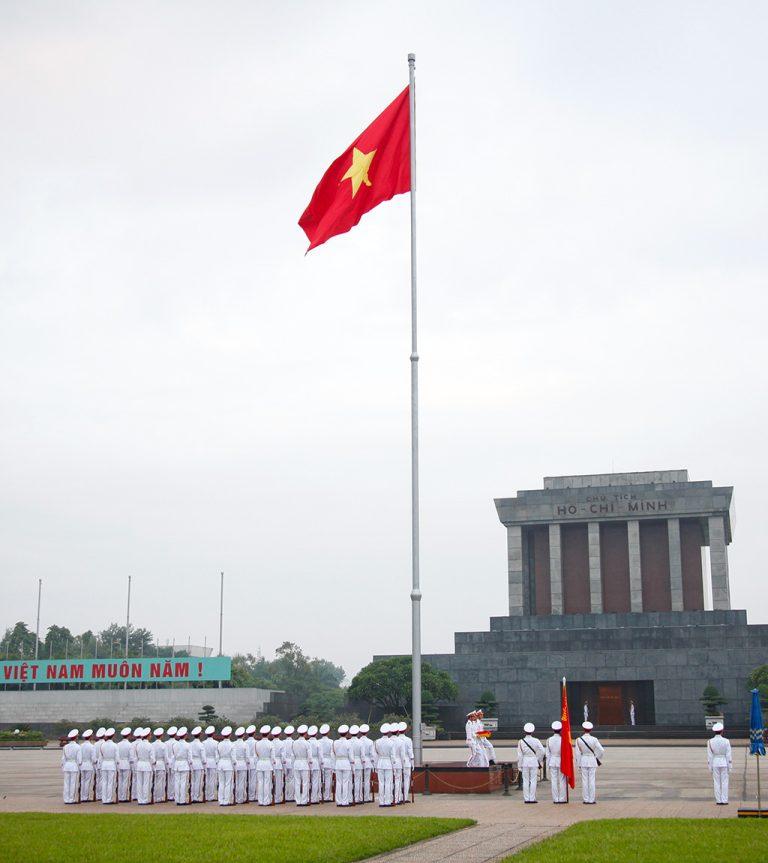
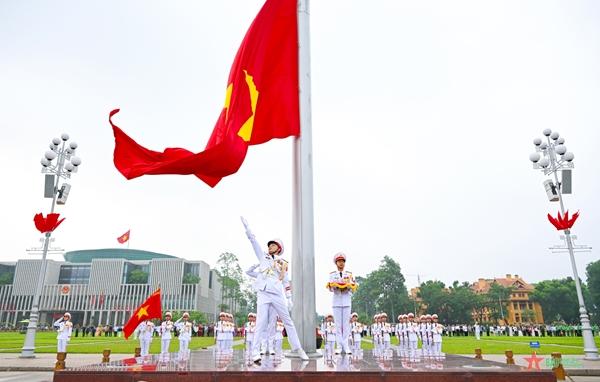
One of the most memorable experiences around Ho Chi Minh Mausoleum is witnessing the Flag-Raising and Flag-Lowering Ceremonies at Ba Dinh Square.
The Flag-Raising Ceremony
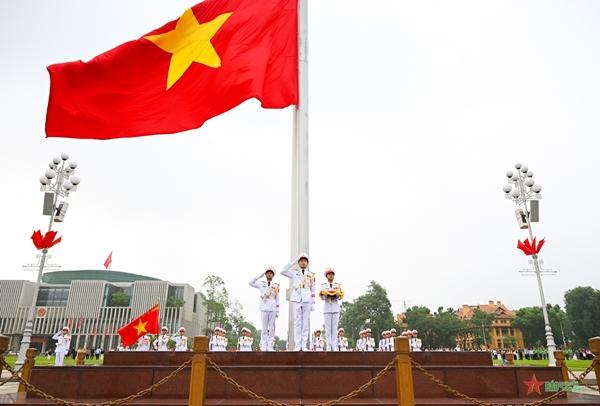
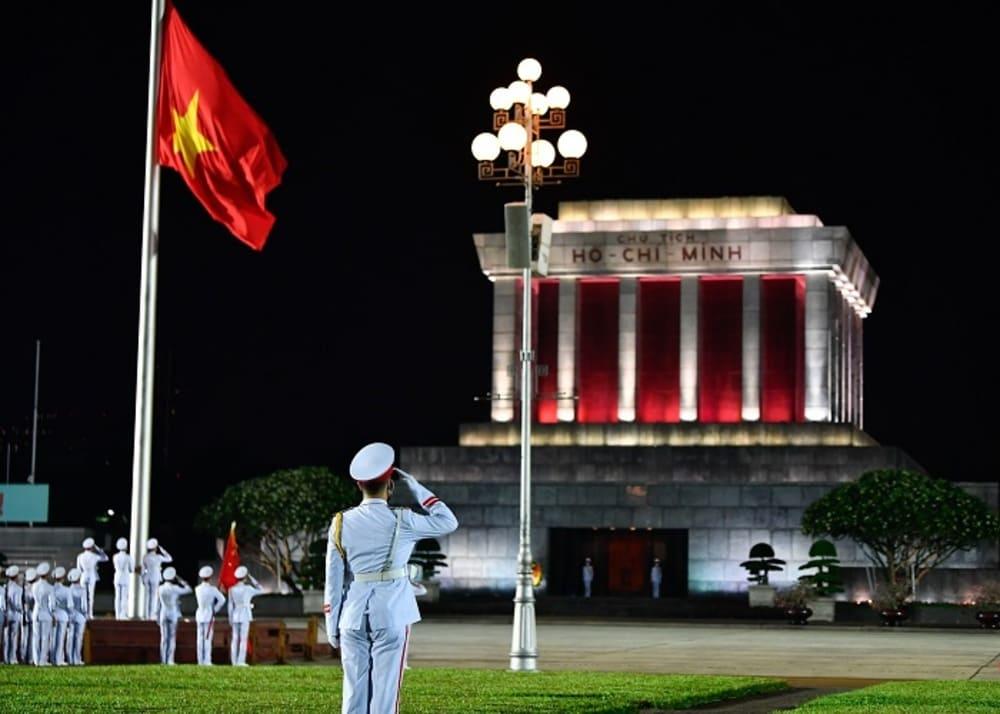
The ceremony takes place in the morning and is performed by a ceremonial honor guard dressed in white uniforms.
The guards march toward the flagpole in a highly disciplined formation before raising the Vietnamese national flag.
As the red flag with the yellow star rises above Ba Dinh Square, the atmosphere becomes particularly solemn and moving.
The ceremony is generally held every morning, traditionally at around 6:00 AM during the summer and 6:30 AM during the winter, although visitors should check the latest official schedule before visiting.
The Flag-Lowering Ceremony
The Flag-Lowering Ceremony takes place in the evening.
The national flag is lowered in a formal ceremony performed by the honor guard. The ceremony attracts both local residents and visitors and is a memorable way to experience the solemn atmosphere of Ba Dinh Square.
6. Attractions Around Ho Chi Minh Mausoleum
One of the best things about visiting Ho Chi Minh Mausoleum is that several important attractions are located within the same historic complex.
The Ho Chi Minh Presidential Complex
The Presidential Complex is closely associated with President Ho Chi Minh and includes several locations where he lived and worked during the later years of his life.
The area provides visitors with a more personal perspective on his daily life and simple lifestyle.
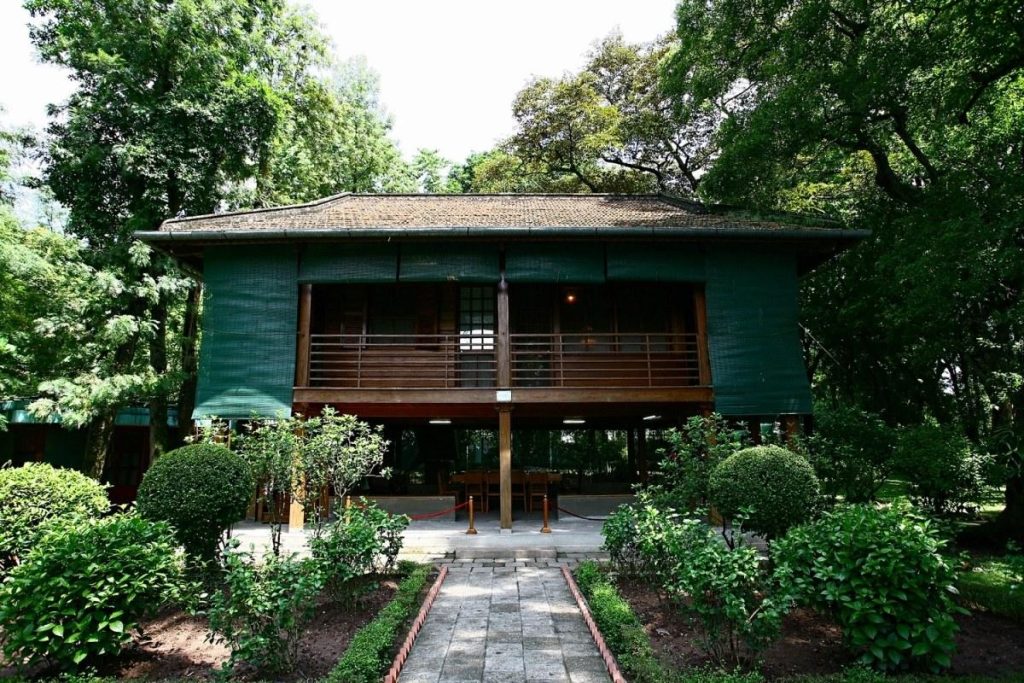
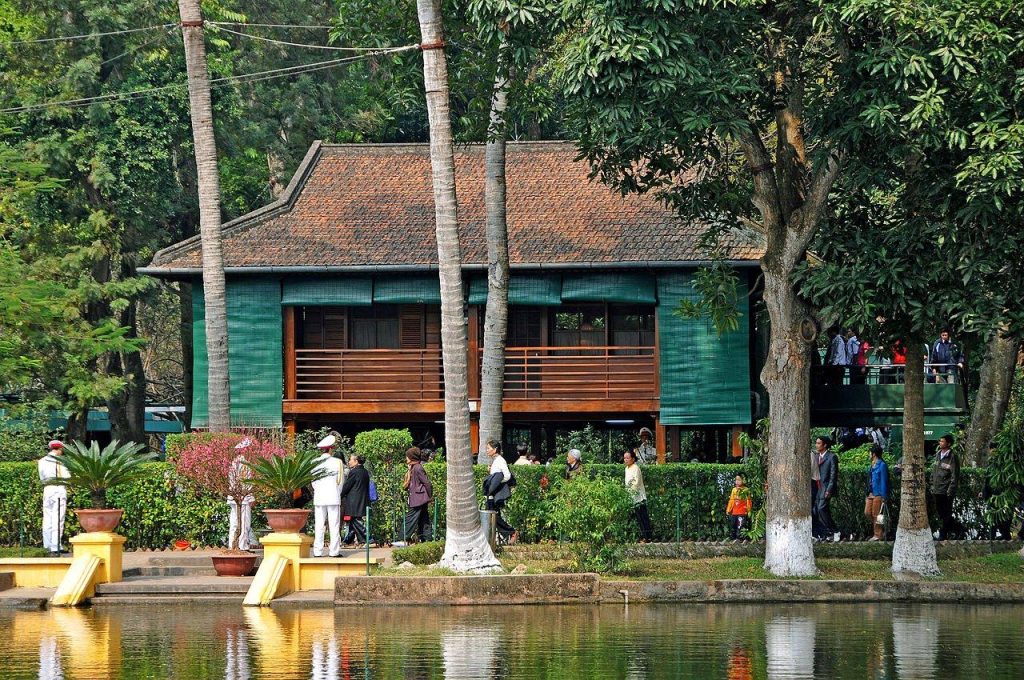
Ho Chi Minh’s Stilt House
The Stilt House is one of the most charming attractions in the complex.
Designed in the style of a traditional Vietnamese stilt house, it reflects President Ho Chi Minh’s simple way of life.
Visitors can see his working area, books, personal belongings, and the peaceful surroundings where he spent his final years.
Ho Chi Minh’s Fish Pond
Next to the Stilt House is a peaceful fish pond surrounded by trees and greenery.
The tranquil setting provides a pleasant contrast to the monumental architecture of the Mausoleum and the large open space of Ba Dinh Square.
Ho Chi Minh Museum
The museum houses numerous photographs, documents, and artifacts related to President Ho Chi Minh’s life, revolutionary activities, and historical legacy.
Travelers interested in Vietnamese history should consider spending additional time here.
One Pillar Pagoda
Located close to the Mausoleum, One Pillar Pagoda is one of Hanoi’s most recognizable architectural landmarks.
The pagoda is famous for its unique design, standing on a single stone pillar in the middle of a small lotus pond.
It is an excellent place to combine with a visit to the Mausoleum and the surrounding historical attractions.
7. Ho Chi Minh Mausoleum Opening Hours
The Mausoleum generally welcomes visitors for the morning viewing ceremony on Tuesday, Wednesday, Thursday, Saturday, and Sunday.
It is generally closed to visitors on Monday and Friday, although schedules may change during public holidays, special events, or annual maintenance periods.
Typical visiting hours are:
April 1 – October 31
- Tuesday – Thursday: approximately 7:30 AM – 10:30 AM
- Saturday, Sunday & public holidays: approximately 7:30 AM – 11:00 AM
November 1 – March 31
- Tuesday – Thursday: approximately 8:00 AM – 11:00 AM
- Saturday, Sunday & public holidays: approximately 8:00 AM – 11:30 AM
Visitors should check the latest official information before their trip because opening hours and visiting schedules may occasionally change.
8. Entrance Fees
Visiting the Mausoleum itself is generally free of charge for Vietnamese citizens.
Depending on the attraction, certain areas within the surrounding historical complex may have separate entrance policies or fees, particularly for international visitors.
Because regulations can change, international travelers are advised to check the latest information before visiting.
9. Important Rules and Etiquette
Ho Chi Minh Mausoleum is a highly respected and solemn national site. Visitors are expected to behave respectfully throughout their visit.
Dress Appropriately
Wear modest, neat, and respectful clothing.
Avoid shorts, very short skirts, sleeveless tops, or clothing that may be considered inappropriate for a memorial site.
Maintain Silence and Order
Visitors should remain quiet and follow the instructions of security staff and site personnel.
Mobile Phones
Keep mobile phones on silent mode and follow any instructions regarding their use.
Photography and Filming
Photography and filming may be restricted in certain areas.
Visitors should always follow the posted regulations and instructions from staff.
Personal Belongings
Avoid bringing unnecessary luggage or large bags. Items that are not permitted may need to be deposited at designated areas.
10. Tips for Visiting Ho Chi Minh Mausoleum
Arrive Early
Arriving early is highly recommended, especially on weekends and public holidays when visitor numbers can be significantly higher.
Combine Several Attractions
Instead of visiting only the Mausoleum, travelers can explore the entire historic complex in one morning:
Ho Chi Minh Mausoleum → Ba Dinh Square → Presidential Palace → Ho Chi Minh’s Stilt House → Fish Pond → Ho Chi Minh Museum → One Pillar Pagoda
This route provides a comprehensive introduction to both Vietnamese history and Hanoi culture.
Prepare for the Weather
Hanoi can become hot and humid, particularly during the summer months.
Bring drinking water, a hat, or an umbrella when necessary. However, visitors should follow local regulations regarding what can be brought into restricted areas.