

If you’re wondering where to go in Hanoi, be sure to visit the Temple of Literature (Van Mieu Quoc Tu Giam). This is the first university in our country – a place that preserves the cultural and historical landmarks of the thousand-year-old capital. Let’s learn more about the Temple of Literature in the article below.
1. Introduction to the Temple of Literature
1.1 Location of the Temple of Literature
The Temple of Literature is located at 58 Quoc Tu Giam Street, Dong Da District, Hanoi, less than 2 km from Hoan Kiem Lake and Hanoi’s Old Quarter. Thanks to its central location, this historical site is very convenient to visit as part of a tour of famous cultural sites such as Thang Long Imperial Citadel, Ho Chi Minh Mausoleum, or the National Assembly Office.
1.2 History
When was the Temple of Literature and National Academy built? The structure was built in 1070 during the reign of King Ly Thanh Tong. Initially, it was a place of worship for the Four Disciples, Confucius, and Zhou Gong. In 1076, King Ly Nhan Tong built the National Academy right next to it – a place to teach the king’s children and the children of noble families.
During the reign of King Tran Thai Tong, it was renamed the National Academy, accepting even the children of commoners with outstanding talents. During the reign of King Le Thanh Tong, the Temple of Literature and National Academy began erecting steles commemorating those who passed the doctoral examinations. During the Nguyen dynasty, the National Academy was established in Hue. The Temple of Literature was renovated and later renamed the Temple of Literature in Hanoi. In 1947, the French colonialists bombarded the building, causing it to collapse, leaving only the foundation, two pillars, and four stone inkstones.
1.3. Opening Hours & Entrance Fees
This historical and cultural site in Hanoi is open every day of the week from 8:00 AM to 5:00 PM. So, is there an entrance fee to enter the Temple of Literature? Visitors need to purchase and present tickets at the ticket counter.
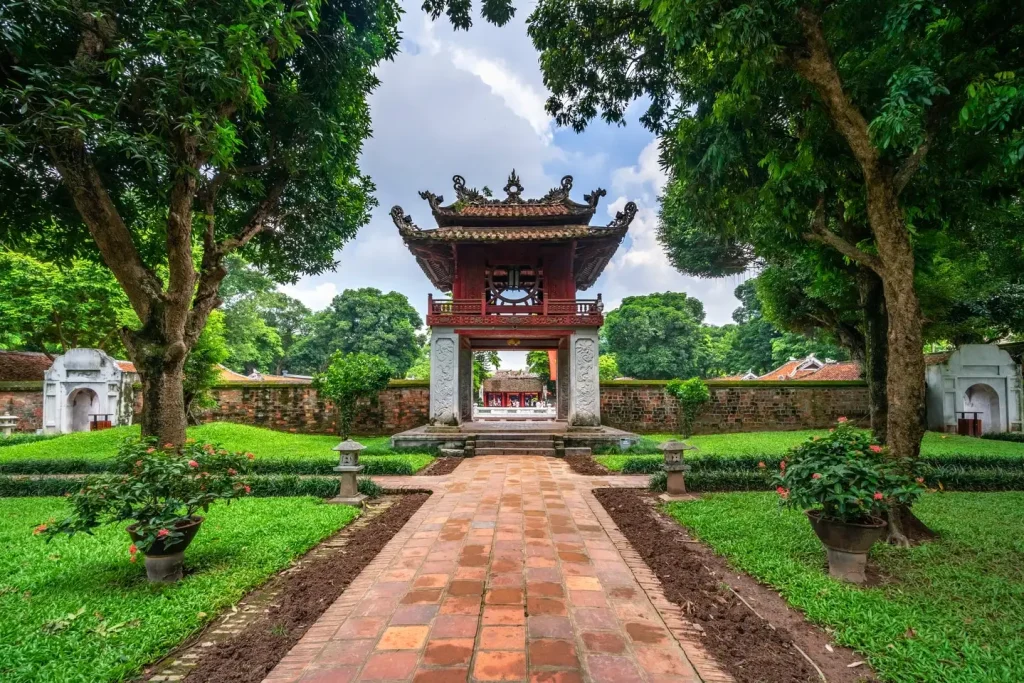
2. The Unique Architecture of the Temple of Literature – National University
This complex of historical relics covers approximately 54,331 square meters and includes many diverse structures such as the Temple of Literature, Ho Van Lake, National University, Khue Van Pavilion, and the Garden of the Academy… Surrounding the grounds are brick walls stained with the passage of time. The structure bears the distinctive features of the early Nguyen Dynasty’s imperial architecture. The structure of the Temple of Literature – National University has a symmetrical layout in each area and layer along the traditional North-South axis.
The diagram of the Temple of Literature – National University consists of 5 areas separated by walls and gates:
• The first area starts from the main gate, Van Mieu Mon, to Dai Trung Mon, with smaller gates on either side, Dat Tai Mon and Thanh Duc Mon.
• The second area extends from Dai Trung Mon to Khue Van Pavilion.
• The third area includes Thien Quang Tinh lake (meaning the well reflecting sunlight).
• The fourth area is the central area, consisting of two large structures located parallel and connected to each other. The inner building is the Upper Palace, the outer building is the Worship Hall.
• The fifth area is the Imperial Academy, rebuilt in 1999. Previously, this was the Kai Sheng Temple, dedicated to the father and mother of Confucius, but it was destroyed.
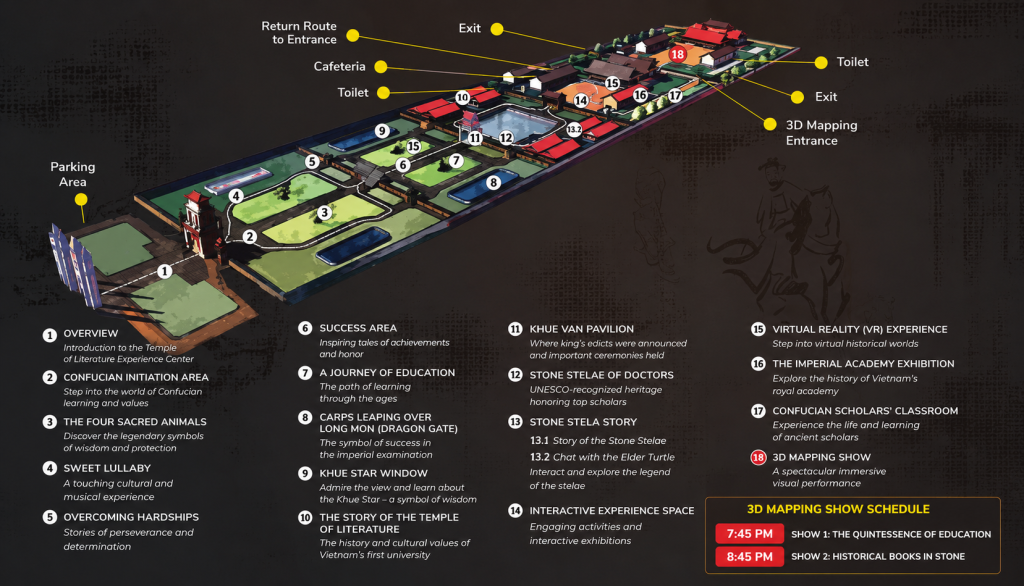
3. Notable Structures Inside the Temple of Literature – National University
3.1. Temple of Literature Gate
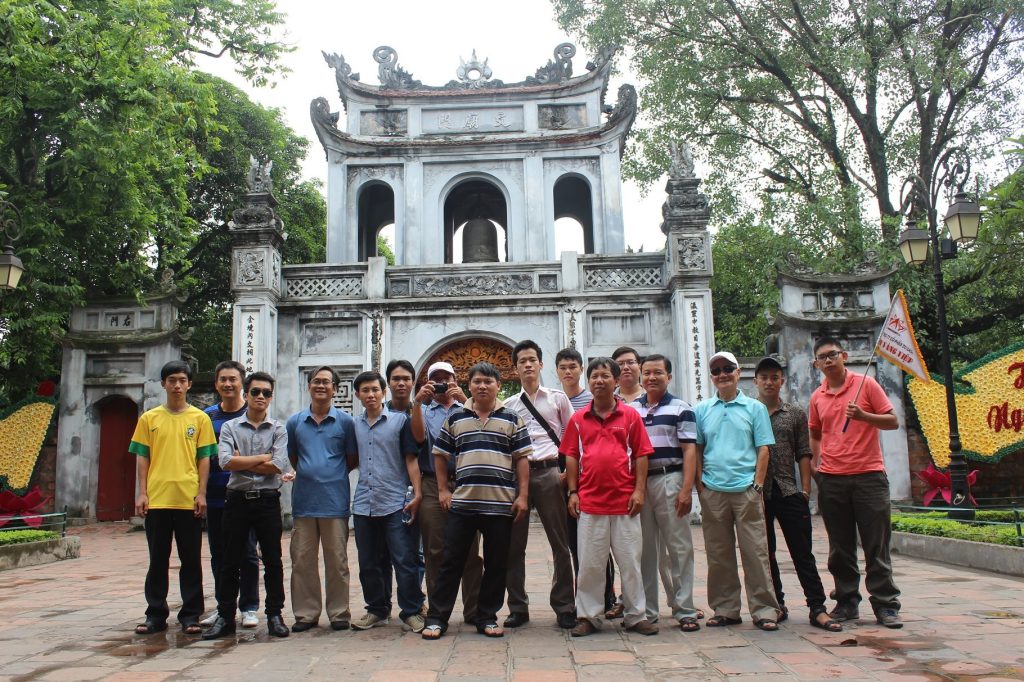
The Temple of Literature Gate is the three-arched gate on the outside of the historical site, exuding a solemn and dignified appearance. The structure consists of three gates and two levels. The upper level bears the three characters “Van Mieu Mon” in ancient Chinese. In front of the three-arched gate are two stone steles on either side, along with the four pillars of the ceremonial gate in the center.
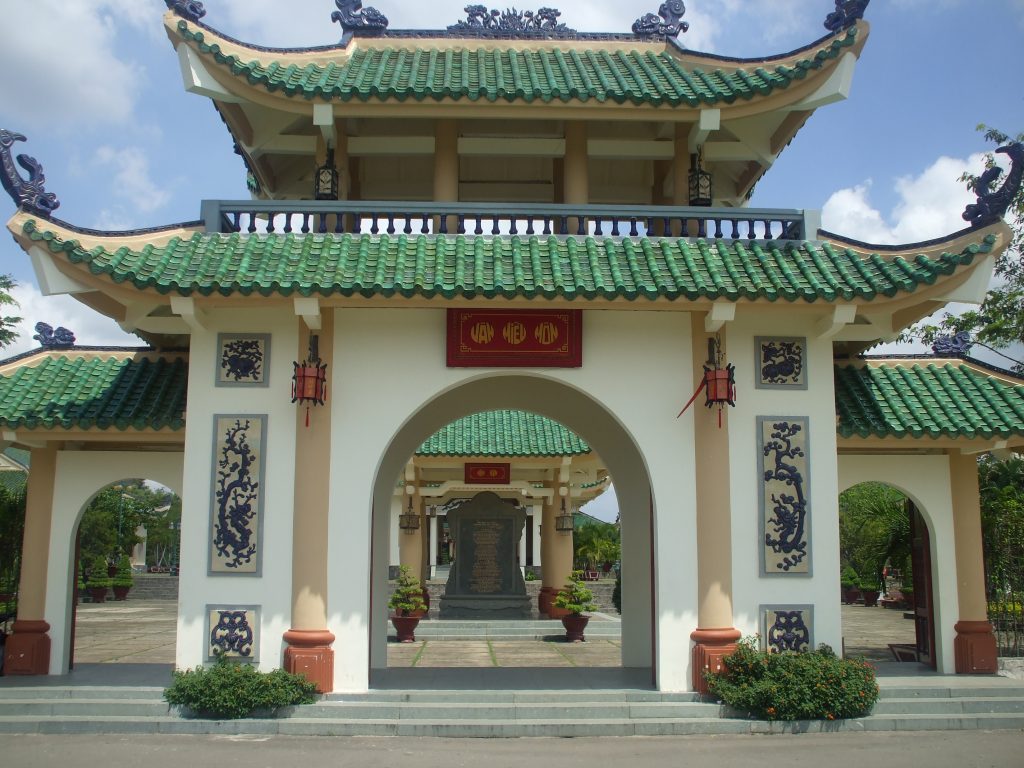
3.2. Van Lake and the Garden of the Temple of Literature
The Van Lake of the Temple of Literature – National University is also known as the Garden of the Temple or Minh Duong Lake. Located right in front of the gate of the historical site, the lake is notable for its considerable size. In the middle of the lake is Kim Chau Hill. On the hill is Phan Thuy Duong – where ancient scholars held literary discussions. The Garden of the Temple of Literature is located on the western wall of the Temple of Literature. It features an octagonal house, ornamental trees, a lake, and many other miniature landscapes. The garden is a place for sightseeing, relaxation, and engaging cultural activities.
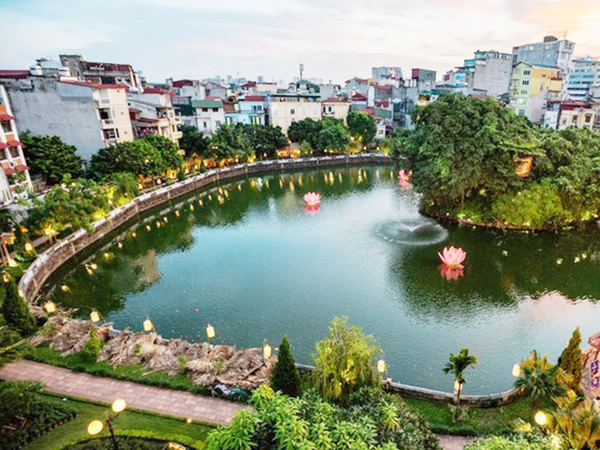
3.3. Dai Trung Mon (Great Central Gate)
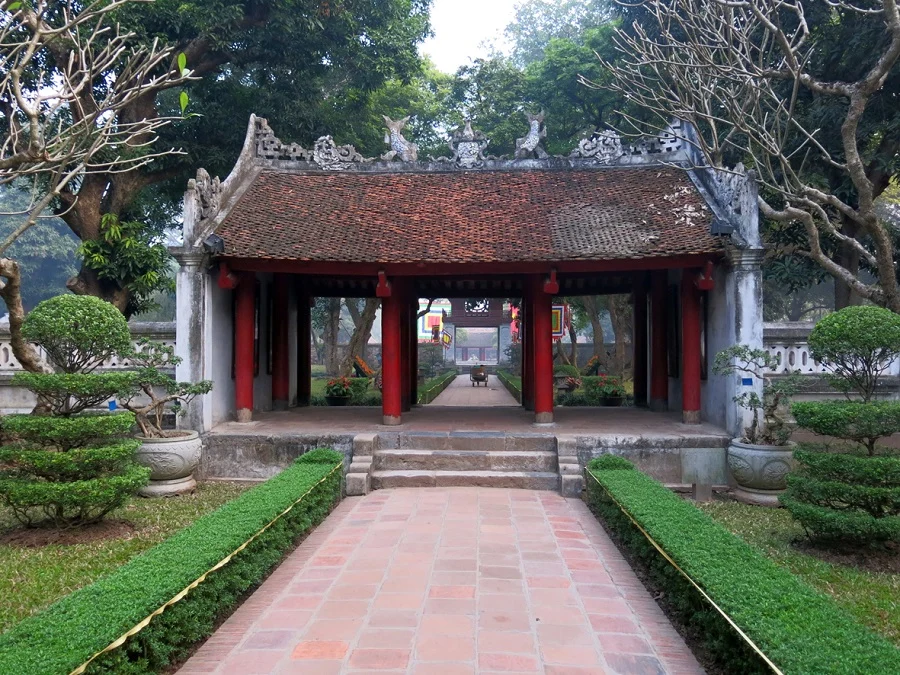
Dai Trung Mon is the second gate of the Temple of Literature and National University. This structure consists of three sections, built on a raised brick foundation with curved tile roofs designed in the style of ancient pavilions. The space in front of and behind Dai Trung Mon is extremely vast, with parallel paths, trees, and a spacious lake. Therefore, it possesses a rare tranquil and serene beauty amidst the bustling city of Hanoi.
3.4. Khue Van Cac
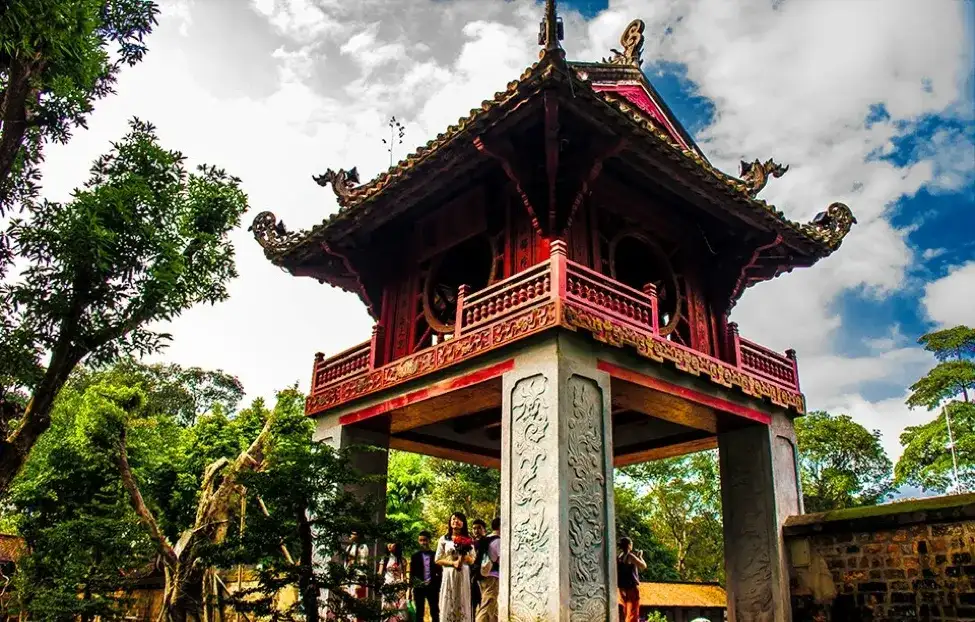
In 1805, Khue Van Cac, part of the Temple of Literature and National University, was built by Governor-General Nguyen Van Thanh during the Nguyen Dynasty. It is a square pavilion with eight roofs, nearly nine meters high, featuring four upper and four lower roofs. Khue Van Cac sits on a square plot of land, each side measuring approximately 6.8 meters, impressing with its unique ancient pavilion architecture.The upper floor is painted in red and gold, with two layers of bright red tile roofs overlapping. The lower floor consists of four square brick pillars intricately carved with patterns. The round windows on the upper floor create a unique focal point, resembling the shining star Khue.
3.5. Garden of Doctoral Steles and Thien Quang Well
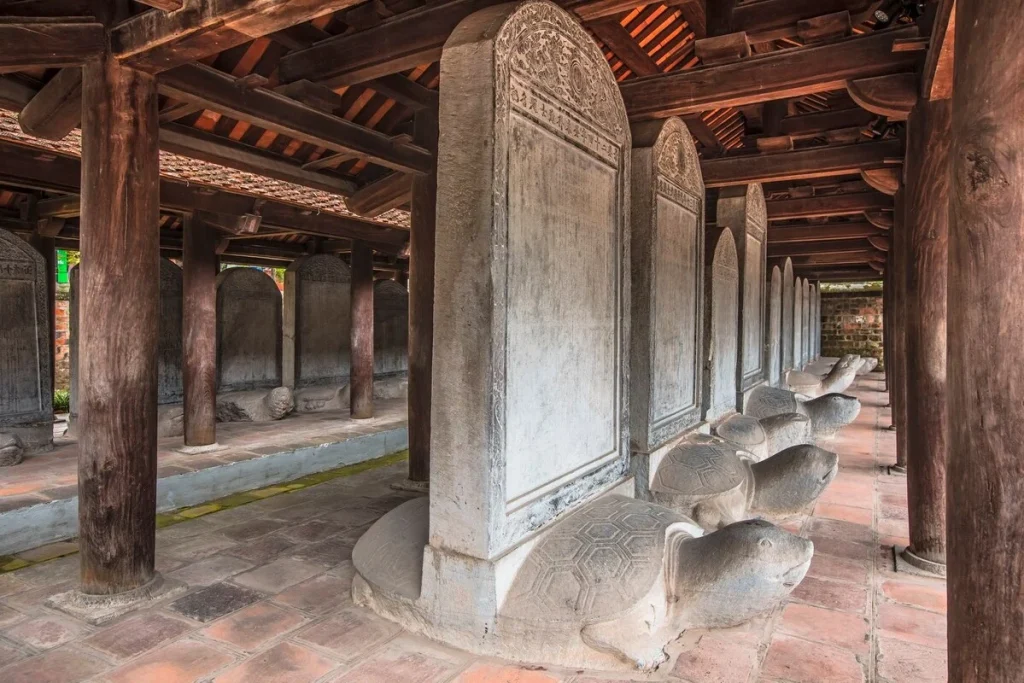
The Garden of Doctoral Steles is a must-see attraction when visiting this historical site. The 82 steles of the Temple of Literature and National University are incredibly exquisite sculptures with significant spiritual meaning. These steles are placed on the backs of stone turtles, inscribed with information about 82 top scholars from various dynasties of Vietnam. On March 9, 2010, the 82 stone steles were recognized by UNESCO as a World Documentary Heritage site. Thien Quang Well (also known as Ao Van) is located behind Khue Van Cac and right next to the area of the doctoral steles. The well is square-shaped, symbolizing the earth. This structure was built with the intention of receiving all the essence of the universe and illuminating knowledge.
3.6. Dai Thanh Hall
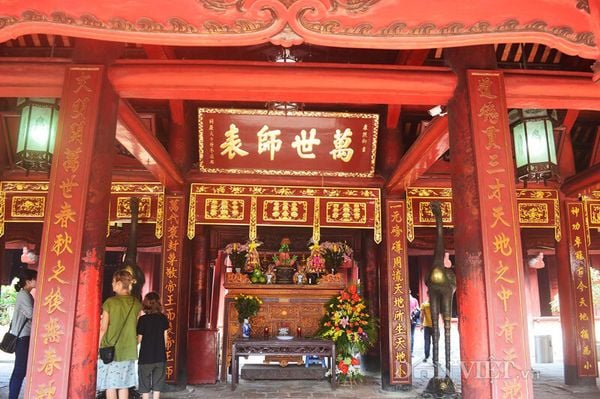
Dai Thanh Hall is the fourth spatial layer of the historical site. In the center is the Dai Bai courtyard, with two rows of buildings running along the west and east sides. The building in front is the Bai Duong – where the ceremony of worshipping Confucius used to take place. Dai Thanh Hall and Bai Duong run parallel, connected by a small pavilion. The structure consists of nine bays, with walls enclosing three sides. Dai Thanh Hall is where Confucius, the Ten Sages, and the Four Disciples are worshipped.
4. What to experience at Van Mieu – Quoc Tu Giam?
4.1. Visiting ancient architecture & learning about the history of Vietnamese education
What is special about Van Mieu – Quoc Tu Giam? Here, you can begin your journey to explore the ancient architecture and the proud history of education in Vietnam. Passing through the solemn Van Mieu Gate, visitors will be led through Dai Trung Gate to admire Khue Van Cac. Next, the 82 doctoral steles and the Thien Quang Well will evoke the tradition of studiousness and the veneration of talented individuals throughout the dynasties. Finally, the Thai Hoc area and Dai Thanh Mon Gate serve both as places of worship for the ancient sages and as exhibition spaces, helping visitors better understand the cradle of Confucian education that produced hundreds of famous figures for the country.
4.2. Experiencing Traditional Culture
The Temple of Literature – National University is now a very popular place to celebrate Tet (Lunar New Year) in Hanoi. Here, you and your loved ones can participate in unique traditional activities such as:
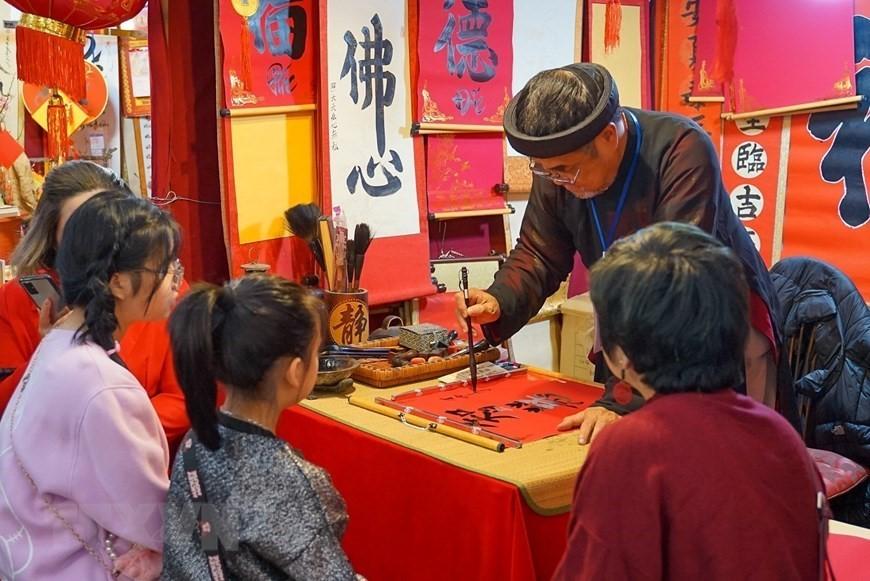
• Requesting calligraphy: In January, this place is very lively with calligraphers offering calligraphy. Visitors can request calligraphy from the Temple of Literature – National University to pray for wealth, good fortune, and especially success in work and studies.
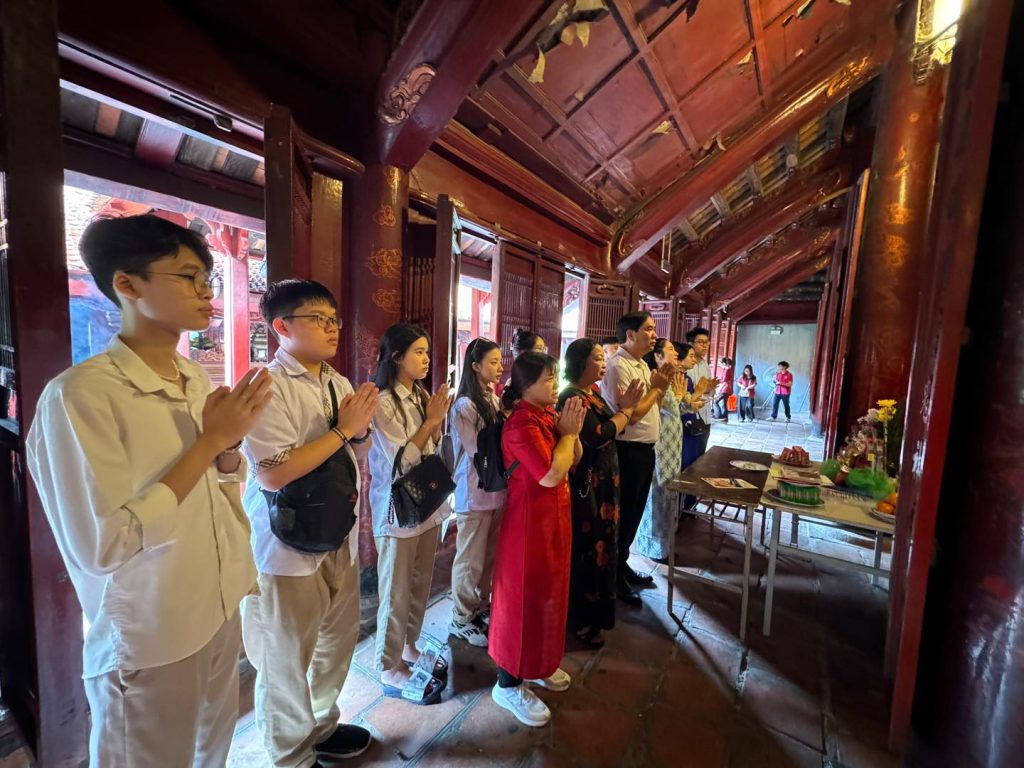
• Offering incense for good luck: Many students and exam candidates come to the historical site to light incense and pray for success in exams and the fulfillment of their aspirations.
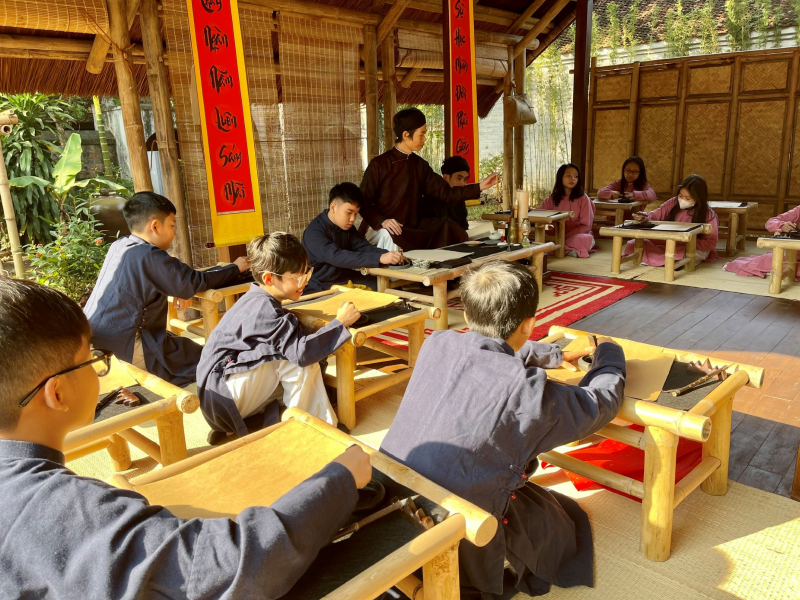
• Experiencing heritage education: Several special programs such as learning Chinese characters, making ancient books, etc., are regularly organized to help students and tourists interact more deeply with the heritage.
• Participating in cultural activities and events: Workshops, exhibitions, thematic displays, or traditional art performances organized by the Van Mieu – Quoc Tu Giam Cultural and Scientific Activities Center regularly attract many visitors.
4.3. Taking photos with an impressive academic setting
Possessing an impressive, tranquil, and fresh landscape, the Van Mieu – Quoc Tu Giam historical site is a beautiful photo spot in Hanoi that you shouldn’t miss. Every corner here is a stunning background for visitors to confidently pose. Photos imbued with the essence of scholarship and antiquity will surely delight you.
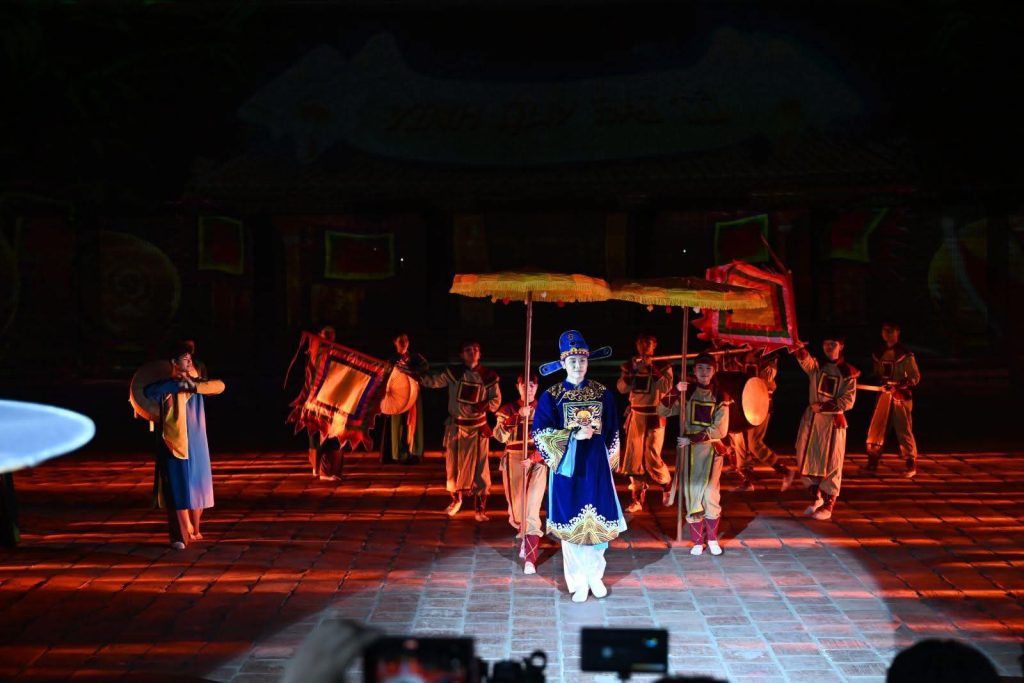
4.4. Participating in the Temple of Literature – National University Night Tour
When participating in the Temple of Literature – National University night tour, you will embark on an emotional journey with impressive light art and subtle sound. Diverse experiential activities such as folk games, storytelling on stone tablets, learning with traditional teachers… help visitors better understand the learning process to become a virtuous person and a talented individual as practiced by Confucian scholars. The highlight of the tour is the 3D Mapping show “The Essence of Learning,” honoring the spirit of respecting teachers, the tradition of studiousness, and the Vietnamese people’s philosophy of valuing talented individuals.
Opening hours and ticket prices are as follows:
• Opening hours: 6:30 PM – 9:30 PM
• 3D Mapping show times: 7:45 PM and 8:45 PM
4.5. Buying souvenirs
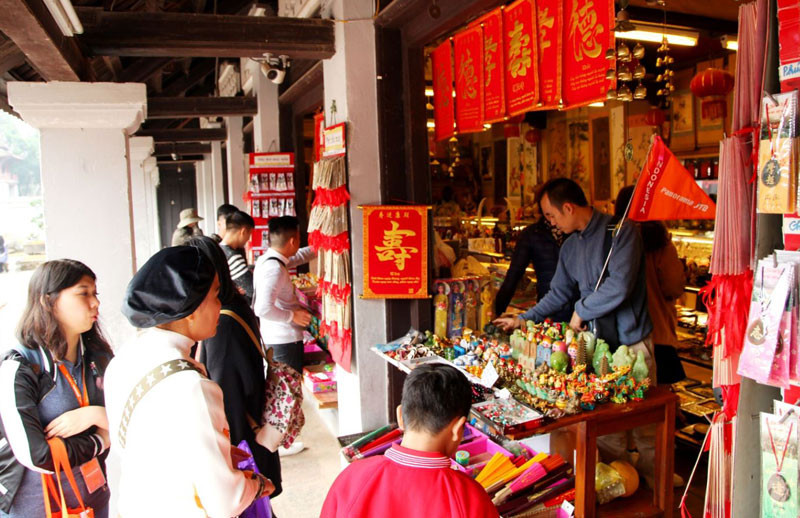
There are souvenir shops within the Temple of Literature – National University complex. Here, you can find many meaningful items such as calligraphy paintings symbolizing good fortune, exquisitely crafted models of Khue Van Cac Pavilion, or other traditional handicrafts. These items are not only symbols of studiousness and intelligence but also mementos of a historical site, making them suitable gifts for family and friends.
5. Important Notes for Visiting the Temple of Literature – National University
To ensure a safe trip, remember these useful tips for visiting the Temple of Literature – National University:
• Visitors must purchase and present tickets at the ticket counter.
• Maintain cleanliness, environmental landscape, and architecture of the historical site; do not touch, sit, lie down, or move artifacts from their original positions.
• Comply with regulations on security, order, and fire prevention; no smoking.
• Dress respectfully and modestly.
• The 3D Mapping show lasts 20-30 minutes. The organizers encourage visitors to enter 60 minutes before the show starts for the best experience, and are not responsible if you arrive later than the scheduled time.